🎙 ENDURANCE CAPITAL | Pacing the Impossible with Mark Allen
🎙 Pacing the Impossible
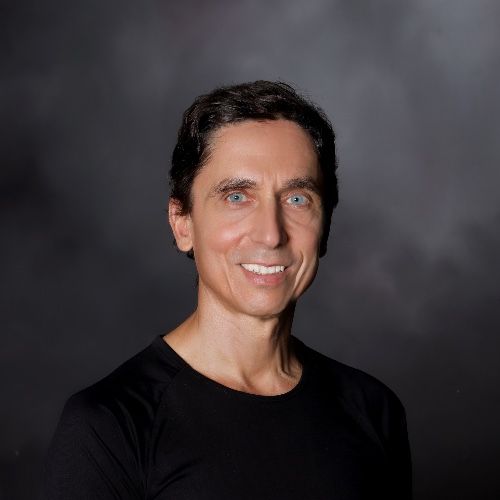
Mark Allen — 6× IRONMAN World Champion
Strategic pacing vs raw power. Rituals. Conviction under incomplete data.
Act 1 — Race Plan: Stakes & Origin
Mark Allen didn’t become a 6× IRONMAN World Champion by going harder.
He won by going smarter.
In this episode, Mark reflects on the decisive shift in his career — the moment he stopped racing emotionally and began racing strategically.
What changed wasn’t talent.
It was pacing.
We explore how elite performers hold restraint when the pressure to surge is overwhelming — and why that discipline becomes decisive over long horizons.
Act 2 — The Build: Systems, Stress & Recovery
We break down the operating system behind Mark’s success:
• Strategic restraint in the opening miles
• Internal anchoring vs external comparison
• Training blocks built for durability, not heroics
• Recovery as a competitive advantage
• Emotional regulation under physical stress
Mark shares the rituals and mental frameworks that allowed him to close impossible gaps — not through aggression, but through metabolically controlled conviction.
Act 3 — Translation: The Operator & Investor Playbook
Endurance and capital allocation share the same constraint:
Finite energy. Infinite uncertainty.
Here’s what founders and investors can apply immediately:
- Don’t surge early.
- Blitz-scaling without durability destroys optionality.
- Separate noise from signal.
- Emotional volatility leads to strategic errors.
- Pace for decades.
- Ask: Can this intensity be sustained for 10 years?
In both racing and investing, the winner is rarely the fastest starter.
It’s the one who finishes strongest.
About Mark Allen
Mark Allen is a 6-time IRONMAN World Champion and one of the greatest endurance athletes in history. His career redefined what was believed possible in long-distance racing — not through raw aggression, but disciplined pacing and strategic composure.
About Endurance Capital
Endurance Capital is where Ironman world champions and olympians, longevity enthusiasts, and operator-founders compare notes on pacing, recovery, and decision-making when outcomes are unknowable and pressure is internal.
We translate elite endurance and longevity practices into practical playbooks for founders and investors who think in decades, not quarters.
Subscribe
Episodes every other week. In YouTube and wherever you listen to your podcasts.
About 60 minutes.
High-signal. Evidence-led. Practical.
Produced by Ignacio Garcia in partnership with OneFinePlay.
Transcript
Welcome to Endurance Capital.
Pacing the impossible.
That's what we're exploring on our first episode.
In sport and startups, most people sprint the first mile.
That's when everyone is cheering for you.
Then most fade in the middle, depart with no crowd, no clarity, and no finish line in sight.
If you have been to Kona Ironman World Championships in Hawaii, that's Queen Ka Lava Fields, where you are on your own, The Impossible Champions Don't just go harder They get good at timing Knowing when to wait And when to search To unpack it I spoke to Mark Allen Ironman Hall of Famer And six-time Ironman World Champion Alongside him Ian O'Brien Former USA Olympic Triathlon Coach Currently a lead triathlon coach And Ken Kruger Founder of fintech startup Pay With Moon from the US We will be translating the skills and tactics of endurance champions into practical operating moves for both founders and investors.
If you are the CEO of a larger corporation, this will also be for you.
Today, we are building an adaptive decision system that you can actually use.
How to stake up, how to read pressure, read the field in real time, adjust when the plan breaks and still finishes strong.
But before we get started, a quick thanks to our sponsor, and which signals to trust.
Quick intro, guys, to set the scene.
Please say your name and one sentence that defines your approach to pacing.
Mark, do you want to start?
Hello, everybody.
I'm Mark Allen.
My title, I guess, is six-time Ironman triathlon world champion, something obviously that I'm very proud of.
And it's been a long journey for me in that sport, but one that really taught me a lot, not only about sport, but about life and how to pace it.
Awesome, Marcus.
Great to have you.
Next, Ian O'Brien.
Welcome to the podcast.
Thank you, Ignacio.
Yeah, my name is Ian O'Brien.
I am an Olympic coach, so I coach athletes for the Olympic Games.
I've had multiple world champions, Olympic medalists, and I focus mainly on active recovery, enabling people and athletes to master recovery to enable them to reach their optimal performance gains, not just about working hard. you kept showing up, you know, sacrificing family, traveling, showing up at the pool or training, whatever.
That is a hell of a time to stay composed.
What has specifically changed in your mindset or process that made you think about a seventh attempt and even made it winnable, no?
Yeah, that's a great question.
You know, the race that I was trying to win was the Ironman Triathlon World Championship.
For those of you who don't know what that is, it starts with a 2.4 mile swim, 3.8 kilometers.
That's followed by a 112 mile bike ride, 180 kilometers.
And then it finishes with a marathon, 26.2 miles, 42K.
Clearly a long, challenging day.
And to get ready for that race, to be at the peak, it's always the last race of the season.
You're spending the entire year preparing.
So, you know, when you just said, Ignacio, the first six years I didn't win, that was six years of my life that I was dedicating to trying to become the champion.
And so, you know, you ask, how did I know that the next time was going to be the one?
Well, I didn't know.
And the real question that I had to answer, and one that probably a lot of you have to answer is, how do I know when I should continue or when should I just throw in the towel and say, It's not in the cards for me.
And the answer that I always came up with during those years is I asked myself, am I executing perfectly at the peak of my abilities?
If I am executing perfectly at the peak of my abilities and I am still not winning, then it might be time to move on to something else.
However, if I know that the performance that I'm putting in is still below what I know that I can achieve, then for sure it's worth continuing. on that road to work toward that greatness or that dream that you're after.
And then, you know, once I decided that, yeah, that seventh time I still had not had my best race, would it be enough to win?
I didn't know.
Then I had to ask myself some key questions.
You know, one is, am I being honest about the work that I'm doing?
Am I doing the work that my goal of winning is asking me to do to accomplish that success?
Am I letting myself be distracted with stuff that's not important, that's not adding to that journey that I'm on?
And, you know, am I comfortable in the work that I'm doing?
Because if I'm comfortable in my work, then I am not ever going to achieve that level of greatness that I'm after.
If I'm stretching, then I might be on the right track.
And to just give you an example of how that looked for me, I live in the United States.
I was doing all my training here.
I was living at home.
And I had a lot of distractions.
I was doing work that I thought was stretching myself.
But then when I was preparing for that seventh Ironman, I went down to New Zealand and trained for several months in the early part of the season.
There were no distractions.
All of a sudden, I realized if I take away distractions, I have all this, a lot more energy to put in to the focus and training that I was doing.
And with that focus, I was able to actually do a lot more training than I had ever done before, which once I saw what I was doing, I realized I am now doing the work that the Iron Man wants me to do to achieve that great success that I'm after.
And then also without those distractions, as Ian just mentioned, I was able to recover.
And I think this is an important piece when we talk about pacing and achieving greatness.
Have I done my best work?
If not, keep going until you do.
Am I distracting myself with things that are not adding to the goal that I'm after?
Get rid of those distractions and then for sure make sure there's time to recover.
And when all of that comes together, that's when greatness takes place.
Is it your self-belief?
Or is it that kind of rivalry you had with Dave Scott?
I mean, if we rewind back to:That was an infamous on-course fight with Dave.
Let's give the audience maybe a little bit of background because they probably don't know who Dave Scott is.
o the Ironman Hall of Fame in:And he was actually the guy that helped define the modern Ironman race, as we know it today, demonstrating the need for both physical endurance and mental toughness.
Maybe founders can think about this.
It's not just about building a company and building a team.
It's how tough you can be. in front of your closest rival, no?
Do you want to give a little bit of background there, Mark?
And what are your thoughts in this space?
Yeah, Dave Scott in the early 80s was the guy who was setting the standard for all of us.
He was showing us what was possible.
And so we would go to the Ironman, he would win, we'd see what he did.
And then we would go back and train and figure out how we would have beat him in that last race that we just had.
Well, last year's race is never going to be next year's race.
He was always thinking ahead one year and putting more and more into his fitness, into his training.
The key about that, though, is that we tend to rise up to the level of our competition and hopefully excel beyond those who are our competitors.
And so he was the gold standard and his performance was what we were all trying to match and then also figure out how do we exceed that.
So you can look at your competition as a roadblock or you can look at them as an inspiration.
And I always looked at Dave as the inspiration for me to take my training to that next level and then one after that and the one after that.
And so in a sense, even though he was my toughest competition, I was also in cooperation with him.
I used his level of performance and excellence to say, okay, this is where I need to go and then go beyond it just a little bit.
And when we can look at our competition in that light, it kind of takes some of the pressure off.
Because if we're looking at them as competitors, often we think, we want them to sort of have a bad day so that I can rise above them.
I wanted Dave to have his best day and rise above that.
Would you compare that relationship that went on for years, like others being built in other sports like Rafa and Roger, like Ronaldo and Messi or so on and so forth.
Is that comparable in a mental way and toughness and endurance?
It's similar because each person is, you know, if you're in kind of like a rivalry that's a duel, the two of us, year after year, you know, we're setting the standard.
But it's also important, what is your relationship with that rival.
Are they somebody you want to beat because you think they're not a good person?
Or are you trying to beat them because they represent the best?
And so it's a rivalry that's built out of respect for their performance, for who they are as a person.
And if there is a respect for each other, I think it's the most healthy way to take the entire sport to a new level.
If that rivalry is built on sort of wanting to beat the person because you think they're not a nice person or a jerk or and come up with that first victory.
And it was, yes, it was a stinging defeat for Dave.
He was second.
At that point in his career, he had won six Ironman titles.
When I started that day, I had won zero Ironman titles.
So it was really the passing of a crown, and it was the passing of a crown of two people who actually really respected each other as people and also as competitors.
We didn't go out and hang out and go to movies together, you know, but nowadays we're close friends.
And it just shows that that rivalry was a very healthy one for both of us.
I'd love to hear those last words, Mark.
I'd love to hear that.
I think this conversation is, or this part of the conversation is hugely interesting for the audience.
Mark, thinking about pacing and what were you paying attention to internally that told you not to search when he searched?
If you remember that race and what changed later that told you it was time to surge?
You know, when you're trying to pull away from your competition, if you pull away too early, you're going to burn your matches, you're going to burn out, you're going to slow down, and they're going to pass you.
And that's actually what happened in the first six Ironmans that I did.
I pulled away early, too early, I ran out of gas, I slowed down on the marathon, and they repassed me.
And so in that race where we were side by side, I asked myself, when I was thinking, should I pull away now?
And I was always trying to tune in and ask myself, am I trying to pull away because I'm just uncomfortable being next to this guy?
Or is it really time to pull away?
And so if you're being impatient and you just want to move ahead of your competition so that they're not so close, if it's too early, they're going to pass you back.
And so in that race, I kept asking, is this the time?
Is this the time?
Is this the time?
And finally, when we got to about a mile and a half to go, it was almost like the island itself just shouted out, go.
And I put in a surge that he wasn't able to respond to.
And in just those closing minutes of the race, that's where the move happened.
And it was the perfect timing.
But again, it took a lot of patience.
And sometimes when we are trying to better our competition, we want to just like push ourselves in the very beginning so that we get a gap on them.
But it's very often difficult to hold that gap when you push too hard in the beginning.
It's much more effective if you're just kind of patient, waiting, waiting, staying in the game, staying close, keeping an eye on everything.
And if you are quiet and tune in, you'll know when it's the time to put in that huge surge.
Well, you're right on the target of this conversation, pacing the impossible.
Thanks for those insights, Mark.
Let's move on to Ian.
When a plan collapses, the weather flips against you, nutrition is bad, your stomach hurts, energy is down, your legs are not there.
How do you reset an athlete?
or how do you give them clues to figure out what to do at that point?
What's the first instruction you give and why?
Actually, there isn't a first instruction.
What I would normally do is it's a very interesting question because this happens very frequently.
There's always something that happens just in life.
There's always something that goes wrong or something that you've got to pivot to kind of move towards.
So what we try and do is make sure they're prepared going into those races.
So prior planning and is obviously hugely important and prevention is better than cure so if you can like prepare for all those types of things the better so some of the things you mentioned there were weather so we need to like the biggest thing that's going to affect us for the weather is probably riding because we ride bikes and triathlon and having the ability to ride in the rain so practice in that which are which are actually a lot of athletes don't want to do so you've kind of got to like nurture that want to want to actually have an edge over other people in that type of weather nutrition is something that you would and work with a nutritionist to make sure that works effectively.
And all these kinds of things all set the picture.
So if you prepare effectively with as many things as you can, if you can go into the weeds of all the minutiae, it's going to pay dividends later on.
They will be in your back burner should something go wrong, whether it's nutrition, whether it's the weather, or even the potential for injury, a cramp or something similar.
So prior planning is hugely important.
Making sure people are sleeping well.
I would say the three most biggest kind of things that happen and are a result that is not desirable are the lack of sleep, not dialed in nutrition, and stress.
And stress comes in all sorts of shapes and forms.
It can be just normal everyday stress.
It could be training stress, maybe coming too hard.
It could be stress you're putting on yourself.
There's so many different variables.
The race pressure, the anxiety, the environment, of course, such as the weather.
So preparing for all those things is hugely important.
When it actually happens in a race, though, it's my job to teach athletes to kind of have good leadership skills and pivot in the moment to be able to switch and push that, you know, look at what's going on, make an assessment, and then make immediate decisions.
Sometimes they're only focusing on the next few feet in front of them.
It just depends on what stage of the race they're at.
Others are thinking further down the line.
Am I going too hard right now?
Is it going to affect me later?
So leadership development is hugely important.
Again, the preparation lessens the chances of anything going wrong.
The key, though, is to be flexible because anything can happen in a race.
And my job is to develop leaders as a coach.
So having flexibility is hugely important.
And one of the key things I will say, is it's not over till it's over.
There's so many people who when hit with a slight bit of adversity will start to back down.
What you should be doing is trying to problem solve.
Okay, work the problem.
What do I need to do?
Reassess, stay the course.
Okay, it's not over till it's over.
And then trying to stabilize where I'm at to reduce that level of stress, retake control and push forward.
And I think the key part of that is obviously to remain flexible.
Yeah.
Very relevant stuff, Ian.
Very relevant stuff.
Sorry, you want to say something else?
No, really, just to kind of look at the situation.
A lot of people see something happen and immediately it's disaster.
It's not.
You've just got to reframe it.
Okay, pivot.
What's coming next?
How do I make those changes?
For me in a race, it's very difficult because I only see athletes at certain times and I will provide information once I understand what's going on to try and remain situationally aware.
It's hugely important. of nutrition, et cetera.
And it was coming to my mind, our next guest, Ken, changing weather conditions from a startup point of view, you know, the perfect storm.
Fortunately, Ken, you had enough fuel to continue.
So that was not an issue for you.
But I think we can say, correct me if I'm wrong, but I think we can say that you are now in some sort of, your second honeymoon was when you started the company and you did the first race.
And now after the perfect storm, as Ian was saying, you were flexible enough to change plan and build for an even bigger, more ambitious plan.
And so now your revenues are increasing again, multiplying every month, your uses are coming back. after two years when you went to zero, zero literally.
But you had the fuel, you had the cash in the bank account so you could turn the company around.
So question for you, Ken, how do you decide where to repace the team and to keep them pushing after this perfect storm?
business growing very quickly.
Everything was just perfect.
Any founder's dream.
And then it was the last business day before Christmas.
I get the news from our banking partner that, hey, you know what?
We can't work together anymore.
We're getting all this pressure.
We don't want to touch anything having to do with digital assets.
Sorry.
Nothing we can do.
Goodbye.
So early:And that was extremely challenging to go from this peak of my life to literally taking no money.
You know, what are we going to do?
Right.
And I had to figure out what are we going to do?
What's the plan?
And one of the things that was very important for me was to put one foot in front of the other.
Okay, what's the plan?
What do we do next?
And we went through a number of plans.
People who want to stick to it, people who believe in the mission, find what we do to be very meaningful and really enjoy that process and have trust in each other as a team and in me as a founder.
And, you know, I feel very fortunate that we've recovered from where we work.
We're doing better than ever.
And I think from a team culture perspective, that's even reinforced the trust that my team has in me, having led them through that period of time through the darkness.
Well, I'm learning a lot of new things.
And I always thought that you were a very wise man and very compassionate.
But I think you're even more today because thank you so much.
You didn't call me the day before Christmas to tell them that you were shutting down the company.
I was like, at least tell me after Christmas.
Yeah.
Yeah.
Yeah.
You know, but.
So I'm really proud of you, Ken, because you've turned the business now.
You're doing this fundraise that, you know, I had all the trust in you and this is a perfect example of perfect storm, flexibility, adapt, and execute.
So this moves, we move into the act number two, the build.
So when the plan breaks, belief becomes the process.
No belief, no plan, no execution, no nothing.
So I would like to explore with you guys how to turn that principle of belief into a simple system that we can use for the benefit of getting to the finish line number one.
So back to you, Ken, again.
Whenever your plan broke, you were just talking about that.
After a half quarter, after you were shut down, what did you deliberately stop doing?
The key thing was having a plan.
Right?
Is that saying about failure to have a plan is planning to fail?
Right?
Having a plan was very important.
And then keeping a sense of normality to the situation.
You know, while it may seem like a crisis internally, and it may feel like the world is ending, You probably don't want to project that onto your team.
You don't want to internalize it too much.
You want to say, you know what, I'm going to get through this.
It's going to be okay.
I can do it.
And to your point around belief becoming the process, that's it.
It's like, you know, what is that story that you tell yourself?
You know, I did it once, I, you know, and I think that's really important.
Well, the fact of the matter is that when you started three years ago, you had a contract with Visa in the U.S. and you went through this thunderstorm and you ended up with a global contract with Visa.
I mean, that is, you know, rising to the top, you know, taking advantage of, you know, the lessons from the thunderstorm.
Now, Mark, over to you.
If an athlete goes out too strong, What single rule do you give them to prevent, to anchor the rest of the race and to prevent a burnout?
Well, the answer is kind of similar to what both Ian and Kenneth have said where you have to do it.
Let's say you're going to a race and your goal is to win.
You're excited, you go really hard in the beginning, all of a sudden you run out of gas and you crash.
And I've experienced that many times.
I got too excited, too early.
I really went too hard.
All of a sudden, I'm losing my momentum.
Somebody passes me.
They pull away.
I'm not going to win now.
So the question is, my main goal is to win.
We all have our pie-in-the-sky dream that we're going for.
But what happens when something takes place and you realize it's not going to happen today?
Do you just drop out?
Do you give up?
Do you stick with it but just sort of give a half effort?
I had to ask myself that question every time I saw that victory slip out of my hands when I had been in the lead and then I'm not anymore.
And the answer was always give 100% of what I have to give in this less than 100% situation that I'm in.
So one year I was in the lead for most of the day with just a few miles to go in the marathon.
I was reduced to walking.
Dave Scott passes me.
There's no way I'm going to win the thing.
And I thought, you know what?
My body's working at about 20% of peak capacity right now, but let me get 100% out of that 20%.
And that's a skill that will really serve you later because there might be another day where you misjudge your effort, you mispace it by, let's say, 10%.
So you're still working at 90%.
And if you got bummed about that, and sort of gave up, you're not going to win.
But because you have this skill of giving everything you have in every moment that you're in, all of a sudden it salvages the day and you end up winning anyway.
The second piece that is really important, and Ian sort of mentioned this in a different wording, is when things are not going as planned, to try to avoid judging that situation.
Because usually if you judge it, you're going to say, this is not good.
I'm not going to win.
I'm not a good person.
My life is going to fall apart.
Death and doom, right?
You go to that place where the chatter isn't helping you out.
So instead of judging those moments, assess.
What can I do?
What do I need to do to continue on and give the best effort I have?
What do I need to do to stay completely engaged in this moment and the one after that and the step after that and the minute after that?
So when we can switch from judging a situation and just assessing it, and that's basically what Ken said, you know, look, things aren't going the way we hope.
What can we do?
What is our plan now?
How do we pivot?
And so, you know, people often think that when victories happen, it's because everything went perfectly all day for you, and that's never the case.
You always have moments where you don't know if you can keep going.
It looks like somebody else is stronger.
And so instead of judging and saying, oh, this is terrible, assessing and saying, what do I need to do here?
And when you do that, you can just feel the pressure ease.
You can feel more energy come back in.
You start to flow again.
And like in business situations, that creativity stays on track.
And you modify the plan based on what's happening in the real world. right in front of you, right here, right now.
And that's really valuable, I think.
Excellent insights, Mark.
Perhaps we can give the audience a little bit of background, that audience that may not be so familiar with Ironman.
What is it that happens at mile 18?
And what internal cues can you give to an athlete?
And I'm also thinking about a founder at the 18th mile. of their own marathon that most reliably can tell them to hold back, you know, hold on before they push to the finish line.
Can you give a little bit of background?
You know, the Ironman is a total of 140.6 miles of swimming, cycling and running.
And as the day goes on, the difficulty just compounds.
So, you know, when you're actually at mile 70 of the race, you're not halfway through, you're only about maybe 20% through in terms of what the focus and the concentration is going to take to close those final 70 miles.
And so if you can kind of think of it in those terms, you actually end up conserving your energy to the point where when you get to, let's say, eight miles to go, you know, in a lot of ways with eight miles to go, you're finally halfway through. because that concentration it takes to get through those closing miles often is just as much as it took in those earlier 132 miles to get to that point.
A lot of efforts get derailed in the last 5 or 10 percent of the time that you put into it.
And so there's a real level of patience and persistence that if you just tell yourself from the very beginning that, and it's the hardest to close.
Same in triathlon.
Those closing miles are the hardest.
Amazing insights, Mark.
This is a quick reminder that you are listening to Endurance Capital with me, Ignacio Garcia.
We will be right back after a short word from the partners who helped make this series possible.
One thing I've learned from athletes, coaches, founders, and everyone is that understanding your own biology is the real unlock.
And that is exactly what's and will give you 100 pounds off a stride one and 30 percent off any other individual stride test or supplements.
I'm thinking about Ian now from your perspective as a coach.
Founders hit those stretches where progress is invisible, right?
It could be on the 18th mile.
It could be when they are in their last few weeks of training for the world championships.
What signals tell you that an athlete is pacing well, even when the dashboard is flat?
No signals.
What are you focusing on when there's apparently no progress?
Yeah, it can be like training and focusing on especially key races in the season can be a challenge mentally because sometimes they're quite a long way away.
Sometimes for the Olympic Games, it's four years.
So you've got this massive amount of time to prepare for such a big event towards the end.
And so you have to fill it, right?
So you've got to fill it with the right ingredients.
You want to bake the cake so it rises effectively.
So you want to put as much really good stuff in there as possible.
Now, the key with this, and there's a saying, people say, trust the process.
Well, what is the process?
You've got to figure that out and quantify it.
And that's hugely important.
Maintenance of Momentum Throughout that long period, that long stretch.
So whether you are, you know, building in business or as an athlete going through a long training program, there's going to be moments when you can't see your progression.
You can't see how well you're doing.
You'll see what's happening on a day-to-day basis and you'll see how you feel.
Some days that might be really good.
Some days that might not be good.
You're pushing through and super compensating through training stimulus.
So the key with it is to be a good way to get a good way to get a good way to get a good way to get a good way to get a good way to get a good is not to start too fast.
What you'll find is a lot of athletes will come into training, especially when they take it really seriously and go too hard too quick, which can increase the risk of injury, burnout, and all sorts of other things.
So trying to throttle back to start is hugely important.
Then over a period of time, you've got to try and affect a real process and put something in place.
And you do that just by what we normally use is we break down the timeline.
We may add in intermediate races, which will also be checkpoints, testing, evaluations, but also setting specific goals.
And these goals are broken down into long-term goals, i.e. the final event, whether it's a world championship or the Olympic Games.
And then you'll have medium-term goals, which are generally process goals.
These are goals that you want to get really good at a specific thing, a specific skill or a specific level of fitness.
And then you have micro goals, which is where you really focus on staying in the moment and being really good at those small, lo que se puede hacer. how to use body weight rather than your actual musculature to maneuver the bike, so therefore saving energy.
Using your body's elasticity and fascia system to get good rebound, forward lean, etc.
So you're going to look for all these areas, and this is in the micro goal process.
What happens when you do that and you focus on these small goals is you end up forgetting almost.
You're still looking at what's coming down the road But you're not outcome focused You're process focused You're doing the best you can be You are the best you can be in the moment So my job is to manage that And keep people in that moment Yes, we're definitely looking ahead We're planning ahead We're visualizing We're putting ourselves in that race on that day So that when we get there It just clicks and everything falls into place But between now and then And we're filling things with as many opportunities that we can, with as many variances that we can reduce to enable us to have more skills and more tools on race day.
Like we talked about earlier, with something goes wrong, this is the time we try and practice making sure that we have the skills and the tools to problem solve, because that's the biggest thing.
Mark mentioned this earlier about never does a race happen, like everything went well.
It's usually because you've done a really good job of problem solving. is hugely important because without that, the work that you just put in, for example, in a training block or whatever the case may be, you cannot supercompensate.
It takes a lot more out of you and then it can compound.
Injuries can happen and all sorts of other things.
Ian, that is a hugely relevant topic for life itself.
I come across... that do not perceive success without burnout.
And, you know, some of them end up in hospital.
I mean, we're not talking about athletes.
We're talking about people building companies, whether it's mental health issues or physical problems, back problems.
So it is a huge problem is when you want to be number one, It's very difficult to get into that mindset.
To say, I've got to stop.
To recover.
And then build on that.
And so, yeah.
So that's a hugely important topic.
But let's not lose the perspective of the discussion, you know, pacing the impossible.
I guess this is a question for Mark, you know.
When you're going for the top all the time, what questions do you ask yourself to decide whether pain means adjust, recover, adjust, or just quit?
How do you differentiate that point and how can we learn that as a founder, as an investor, as a person in life?
Can we derive some lessons from that?
Well, pain is a signal that we have to keep us from breaking down and causing injury.
So when I am exercising, when I'm working out or I'm in a race, if the pain is kind of like a global thing, that's just the byproduct of your body working at peak capacity.
But if the pain is a pinpointed spot on my body, that's a signal that, okay, maybe I need to stop here.
We're talking about a business situation.
We're working really hard, but when we get to a point where we start to see that maybe we're making small, incorrect decisions, it might be time to start to pull back a little bit.
The pain in the real world of life might be just that we're experiencing some breakdowns.
Sleep gets compromised.
Our Our immune system is getting suppressed.
Mental health is declining to a dangerous point.
And maybe we're trying to pivot a little bit, but it's still not relieving it.
And our physical health might be in the toilet.
You know, like you said, a lot of people going for the peak performance in business have major health breakdown because they haven't taken the time to go, okay, this is the pain of my work.
And we're talking about trying to do something on a really big level.
So if you're trying to be the best at something, it's going to come with challenge.
It's going to come with times where you're pushing yourself beyond the point that is sustainable.
And it's okay to do those sort of overreaching periods.
We do that as athletes.
We have a certain level of fitness.
And to go to that next level, we'll push for a week or two weeks well beyond anything we could sustain.
But then we back it down so that we recover.
And that type of pacing mindset is also important when we're talking about business.
Like I said, you know, my pain points are physical things in my body.
If it's global when I'm working out, that's just the byproduct of me working hard.
If it's a specific spot, that's when I have to pay attention to it.
And again, you know, in the world of business, of work, our pain might be that, like I said, our immune system is compromised.
Our mental health is declining.
We're making incorrect decisions over and over and over.
We're not working out.
Our physical health is declining.
That might be time to really assess, to stop and reframe.
Because if you break down, you cannot perform.
And if you cannot perform, you cannot succeed.
This takes us into the third part of our discussion, translation, the playbook, right?
Over to you, Ian, now.
With athletes, you are constantly walking the line between pushing and holding back to get to the finish line first.
If we borrow the idea of decision throttle from business, what would that look like in high-performance sports?
What are the two or three red flags you watch?
Things like, for example, like changes in mood or training quality, heart rate, sleep, injury signals that will tell you we need to pull back now or the whole plan is over.
Yeah, there's actually quite a lot of things at our disposal to help us monitor that.
So data is hugely used these days in triathlon, heart rate variability being one of those, which does give us a picture.
I'm not sure it's like really finely tuned enough within sport for it to be 100% effective on its own.
So that in combination with even just like feedback from the athlete and how they, you know, discuss with you, because generally like my communication, depending on the athlete is, is daily seven days a week.
So I get to know them very, very well.
Like they get to, you know, you get quite close to them.
So you can actually see that that does help.
So knowing the people around you is hugely important.
Understanding your team and your culture will help you identify anything that's actually coming out. if they're pushing too hard or breaking.
With that technology, which I mentioned a moment ago, for us, for example, the biggest technology I use is WKO, which is a data analysis platform, which you can design your own spreadsheets to extrapolate information out of the data that we take from their wearables, which is all the digital stuff that they wear.
And that gives me a ton of information.
That combined with talking to the athlete and then, and observing things like heart rate variability, heart rate itself.
And also, and this is usually probably the reason why this happens, is whenever somebody is pushing too hard or is potentially getting injured, it's probably because they're pushing so hard and they're going over prescription or they're adding a little bit to the workouts.
And so what ends up happening is collectively over time, and that's one of the red flags I will see, like, okay, you're doing too much.
If you continue doing this, you're going to break or you're going to have sickness or something similar.
So those are the types of things I'm looking for.
And then my job then is to put in an intervention, have a discussion.
Okay, this is where we're at right now.
We need to make sure that we're moving in the right direction.
So we just need to make changes.
And you can see it in people too because they will get, because you have a close relationship with them, they will let you know usually.
So they will be very irritable or they could be all sorts of other things happen.
So women will sometimes have problems with menstruation.
And sometimes we have to log those things because we need to work training around a woman's specific physiology.
So there's all sorts of things like that that happen.
And so, yeah.
And then it's my job then to change what we're doing.
So on a daily basis, we will be flexible.
Definitely one of the most important principles of coaching and make changes immediately as soon as possible to then navigate around that situation.
And if need be, we'll bring in other people to collaborate with us, like sports scientists, sports medicine personnel, to kind of analyze where we're at to make sure we're going in the right direction.
Because it's a fine line between pushing hard and then recovering from that active recovery.
Obviously, we talked about earlier is hugely important and pushing too hard and breaking.
If we set out a specific workout and the cool down is about to happen, and I'm like, my job is to make sure that everything is done correctly, and if the athlete goes off and does an extra 30, 40 miles on the bike afterwards, then that's going to have a collective effect later on.
It's the same as the level of intensity too.
If they're exceeding levels of intensity that I prescribe, I'm working everything out.
This is what we should be doing. and it's all put together in a big picture.
Even if it's just the smallest amounts, it can collectively have a big problem.
So it's my job to kind of go, okay, let's revisit this, review what we're doing, and then move forward.
If an athlete's sticking to it and it's going well, and the variable's looking good, mood is good, they're moving well, they're looking good, they're smiling, you know, you can see that pretty clearly, the culture's great, then generally you don't need to have that so much. your finger is on the pulse and you can feel it.
So the communication is less, especially if the data is going in the right direction.
Thanks, Ian.
If I could translate that into the startup or founder's language for founders listening as our audience, that's the athlete version of a decision throttle, right?
So you could build the same for your company and a couple of clear signals that mean you must slow down, or the risk before you achieve something important, right?
Ken, over to you now.
Consider this.
What comes to your mind in that respect?
When you've been on the verge and you know that your goal is high and you are on the verge of burnout, what signals?
of that?
Are you looking for signals for yourself and your team members?
Yeah, for sure.
So for myself, I've gotten very good as I've gotten older.
I've learned to really read my body well, right?
So when I was younger, I could push myself to the limit, pull all-nighters, and maybe I'd get sick, right?
I'd get a cold or something like that.
And I didn't have that early warning, so I couldn't detect I was about to get sick.
I am like in the ground.
So that's something that's important.
Taking a day off now and then.
Very important.
Because over the long run, like having a company, I've been doing this, you know, working on this company, it's almost seven years now.
And if I just went pedal to the metal, I mean, I, it wouldn't have worked.
Right.
You have, there's everything always seems urgent.
Everything always seems like an emergency.
You can take your foot off. the gas sometimes.
The emergencies become the new norm.
You know, urgency becomes the new norm.
And you have to pace yourself.
And you have to give yourself time for recovery.
In terms of a team, right, I'm very sensitive to that.
And I'm always asking people, how are you feeling about the work?
Is it too much?
Is it too little?
How's your personal life?
Is your family suffering?
Half the people on my team have a child under the age of two.
You know, like they've got families.
They have other pressures outside of their career.
And you need to be understanding of that.
Give them the flexibility so that they can operate at their best.
And sometimes what that means is, you know, you don't want to drive someone, you know, chained to their desk and get all your work done constantly.
Right.
Sometimes it's like, go spend time with your family.
You know, go do what you have to do.
And making sure that your team, you know, you have respect for your team members and they have respect for your team. respect for you enough to not abuse that trust and make sure that's really a two-way street and i think that's you know what's so important about a company culture that allows for this type of pacing that that is music to my ears ken i hope every founder was conscious of that and uh because you know there's a lot of burnout out there um mark let's translate this into iron man uh language maybe and how we apply that to real life.
If a founder structures the week like a negative split, 60% base, 30% build, 10% search or skills, what's the first mistake that disappears?
Well, the first mistake that usually disappears is it keeps people from wanting to get to that finish line before they're actually at the finish line.
So in this case, you know, you have a week, you know that Friday's the finish line, it's only Wednesday, but you've mispaced it, you went too hard too early in the week, all you can think about is getting to Friday and having that weekend off.
Anytime you're trying to get to the finish line before you get there, you're projecting your energy out to that end point, you've lost the energy that you can use in the exact moment to be your most potent self.
And so if, as you said, Ignacio, if you kind of pace it so that the beginning of, let's say, a week is, with training as an athlete, you have your long, slow, steady days.
You have your short, higher intensity days.
You have some days that are long and high intensity, but not every day is sort of like replicating a race situation.
If you do that, you are going to burn out before you get to that Friday.
And athletes are just the same.
We have our training week, and so we're constantly trying to figure out, how can I get the most work in and complete this week the best possible?
but then be able to get up next Monday and continue on with the same process.
Have you thought about this mindset?
You know, the 60-30-10.
Is that something that you have tried to apply it in the company?
I've never heard of that before.
So that's an entirely new technique for me.
Well, I think if you try a similar split inside Pay With Moon, it'll be very interesting to see what the outcome is.
Give it a thought, because it does work in endurance training.
Mark, one more to you.
Thinking about this with an investor hat on, if you were assessing a team's pacing in diligence, what two behaviors would you convince you that they'll still be standing in year five?
that actually, I would say, kind of has three aspects or three faces.
And that one thing is consistency.
You know, as an athlete, the thing that will get you better is not how big of a volume of training you're doing or how fast you're training.
It's whether you're training consistently or not.
And I think it's the same when you're talking about a business.
So the first part of consistency is consistency of output.
So is there a steady flow of work?
As an athlete, am I able to train week in, week after week after week?
When there's spikes and there's crashes, that's a sign that that consistency may not last because at some point that crash might be the last crash and you might be out of business.
As an athlete, that crash from overtraining might mean that you're out of training for a few months because you have a stress fracture or you have an illness that you can't get over.
So one is consistency of output.
The second is consistency of doing the stuff that's very inglorious and kind of boring on the surface.
You know, as an athlete, as a triathlete, one of the things I had to do was to swim a lot.
And so, you know, most swimming pools are 25 yards, 25 meters.
You go up one side of that black line, you come back the other side of that black line, and 35 or 40 seconds, you've seen the entire swim course that you're going to be doing another 50,000 times over the course of a year.
That's very sort of boring, inglorious work.
However, it's essential work that slowly builds that foundation of fitness, of consistency that then eventually leads to what I call like a critical mass where all of a sudden you go from swimming a minute 10 per hundred, all of a sudden one day to next you're swimming a minute five.
And so that consistency of doing the very boring, inglorious tasks over and over and over that are so important for building the foundation of greatness in athletics or work, that's something else that I would be looking for.
If people kind of stick with the boring stuff for a week and then they want to just change up because they're bored, they're never going to reach that critical mass of excellence.
And then the third thing would be to look and see if Over the course of time, there's a consistent evolution in how the work is done.
You know, we always have a strategy that we put in place when we set out to do something.
And when we see how that strategy is interacting with that very unpredictable environment called the real world, we may have to evolve that plan.
As Ken said, he had to evolve a plan and come up with a new one when all of a sudden his world changed.
And it's like that in anything.
A company or workers, they put a plan in place and they're unbending in their willingness to evolve it.
My guess is that they're not going to be successful in the long run.
So it's an evolution.
And I'm not talking about a complete revamp of what you're doing, but just to keep evolving how your work is doing to keep it on track, to keep that needle pointed in the right direction.
I think one of the biggest mistruths is if you're just tough, you're going to overcome everything.
Tough can mean that you end up pushing down a road that is not going to be a successful road.
It's much more important, in my opinion, to be humble and to be willing to adjust and adapt as opposed to pushing through, especially if your strategy is not a winning strategy.
Ian?
Starting too fast, too soon, I think can ruin a race.
You've got to control yourself and stick to your pacing plan and move forward with purpose.
Amazing.
And Ken, what's in your mind?
Yeah, I think most founders think it's much more like a sprint than it is an endurance running.
So I think the realization that this is a long endurance race is very important.
It guarantees someone can wait and hold and search at the right moment.
Experience, practice.
So practice what you want to do and awareness.
Mark?
I was going to use the same word, experience.
Somebody who has mispaced, they're going to learn how to pace it.
And those who have never mispaced, they might be at the pinnacle and all of a sudden they realize, oops, I went too hard too early. experience.
I would say two things.
One, stick-to-itiveness.
And the other being the curiosity and desire to learn.
And I think if you combine those two things, you're going to get that experience.
Awesome.
So before we go, where can people find out a little bit more about you and your work?
Mark?
You can see about my coaching on a platform called tridot.com.
I'm on Instagram, Mark Allen Grip, G-R-I-P.
And also, I've been submitting a lot of writing articles and pieces on Substack.
Mark Allen Grip also there.
Ian.
Yeah, you can find me on Instagram, Ian O'Brien Coaching.
And my website is originperform.com.
And I'm on LinkedIn as well.
And Ken.
Yeah, you can find me personally on LinkedIn.
Or you can find my company at paywithmoon.com.
Excellent, excellent.
That's been really amazing.
And for our audience, these are our champions.
So we've learned a lot from you guys, honestly.
I am your host, Ignacio García, and this is Endurance Capital.
See you on the next episode. on the plan without panic and still win from behind in racing and in startups.
Hit subscribe to be notified when it is available.
Stride helps you make sense of your data, see how your body actually adapts and bring more intention to your life and to your sessions.
As a listener, you can use cold trampoline for 100 pounds off, stride 1 and 30% off any other individual stride tests or supplements.
If you're exploring what's possible, And to the growing endurance capital community around the world.
This series is made possible through production by One Fine Play and the support of our sponsor, Stride Health.
If you found this episode useful, you can follow and share Endurance Capital wherever you get your podcasts.
And learn more about Trampoline and the Trampoline Zermatt Summit on LinkedIn.
The link is in the show description.
I'm your host, Ignacio Garcia, and this is Endurance Capital.