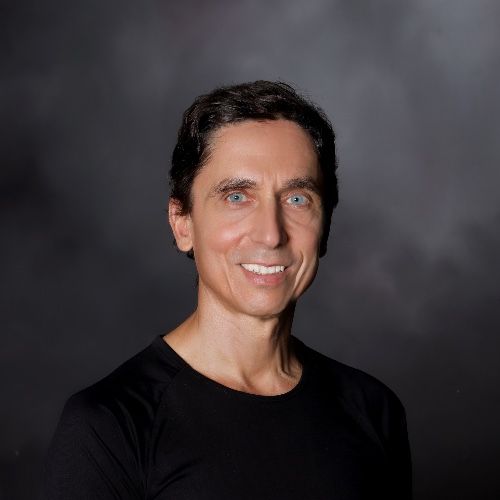
🎙 ENDURANCE CAPITAL | Fluid Intelligence with Mario Mola
🎙 Fluid Intelligence
Mario Mola — 3× World Triathlon Series Champion
Pattern recognition in chaos. Flow as an edge. Smooth execution at race pace.
In short-course triathlon, races are decided in seconds.
A move forms. A wheel is lost. A surge reshapes the field.
There is no time to hesitate.
Only to read what is happening — and respond.
In this episode of Endurance Capital, Mario Mola reflects on what separates strong athletes from world champions: the ability to interpret the race in real time and adapt without emotional volatility.
This is fluid intelligence.
Not rigidity.
Not reaction.
Trained adaptability under pressure.
Act 1 — Race Plan: Stakes & Origin
Mario shares the inflection point in his career when he realized that fitness alone was not enough.
Early on, he tried to impose control — to execute the race exactly as planned.
But elite racing rarely follows a script.
The breakthrough came when he learned to observe first, decide second, and move with precision instead of force.
Fluid intelligence begins with awareness under pressure.
Act 2 — The Build: Systems, Stress & Recovery
We unpack the operating system behind adaptable performance:
• Pattern recognition trained under fatigue
• Staying metabolically calm in chaotic race dynamics
• Practicing variability to prepare for unpredictability
• Executing smoothly at maximum intensity
• Managing cognitive load under sustained stress
Mario explains how elite performers make split-second decisions without panic — and why smooth execution outperforms frantic effort.
Act 3 — Translation: The Operator & Investor Playbook
Markets move like race packs.
Fast. Competitive. Unstable.
The operators who last are not the most rigid — they are the most adaptable.
Three practical applications:
Build pattern recognition through repetition, not theory.
Stay calm enough to see signal when volatility spikes.
Create operating systems flexible enough to adapt without losing identity.
In racing — and in investing — intelligence is not fixed.
It is fluid.
About Mario Mola
Mario Mola is a three-time World Triathlon Series Champion and one of the most tactically intelligent short-course racers of his generation. His career reflects composure, adaptability, and decision-making at speed.
About Endurance Capital
Endurance Capital is where world champions, longevity scientists, and operator-founders compare notes on pacing, recovery, and decision-making when outcomes are unknowable and pressure is internal.
We translate elite endurance and longevity science into practical playbooks for founders and investors who think in decades, not quarters.
Episodes every other week. In YouTube and wherever you listen to your podcasts.
About 60 minutes.
High-signal. Evidence-led. Practical.
Produced by Ignacio Garcia in partnership with OneFinePlay.
Transcript
Welcome to Endurance Capital.
If our first episode was about suffering well through the middle, today is about adapting when the middle makes no sense at all.
Plans blow up, backs surge, markets flip, but the winners don't freeze or fight reality.
They think clearly under pressure and make the next best move.
To unpack this topic in more detail, I have recently sat down with Mario Mola, World Champion, a surgeon of pack racing and mental clarity.
Together with us was Ian O'Brien, ex-head coach of USA Triathlon Elite Team, and Roberto Giannone, co-founder of Sound Dream, a startup building the first neonatal AI, a breakthrough to interpret baby cries and diagnose children's pathologies with AI.
But before we get started, a quick thanks to our sponsor, Stride Health.
More on them later. when the pressure is on.
That's fluid intelligence or the ability to read, adapt, and decide clearly when everything is moving.
In triathlon, it's the athlete who can sit in the chaos of the pack, feel what's happening, and make the right call at the right moment.
Not just once, but across the whole season.
In startups, it's a little bit different.
It's the founder who can navigate shifting markets on certain technology and human complexity without freezing, overreacting, or burning out.
My first guest today is Mario Mola, three-time World Triathlon Series champion and Olympic triathlete, known for his consistency, his tactical clarity, and the ability to run from behind without losing his head.
Welcome, Mario.
Hello.
Hello, everyone. that is using AI to interpret baby cries and early audio signals.
Operating in a space where the signal is noisy, the path is uncertain, and the stakes are real.
Welcome to the podcast, Roberto.
Hi, Nacio.
Nice to be here.
So today Mario will share how he built his race brain.
Ian will show us how you can train this kind of intelligence.
And Roberto will translate the lesson into the world of deep tech startups.
So let's get into it, guys.
The first one is for you, Mario.
You've spent years racing at the highest level.
Tight packs, high speed, Olympic pressure, and you have the reputation, if I'm not mistaken, for being calm, being composed, and very clean in your decisions, even when the race gets messy.
Where does that come from, Mario?
Well, good question.
At the same time, it's difficult to find just one answer.
But I guess most of it comes as many other things from just experience and exposing yourself to situations that bring you to the limit.
In the end, I think that also it's very important to be as much prepared as you can.
I had a flat tire and in many situations that would be end of the race.
irst WTS medal in Auckland in:And I just had to, you know, stay calm, focused and, you know, remind myself that the race didn't finish until we crossed the finish line.
So I think being there in the past, because I had flats in the past where I didn't win the race, but I didn't lose hope, I think helped me to then obtain the prize at the end.
So for our audience, actually, this is the first lesson.
You know, if you guys have a flat tire, stay calm, stay composed, and just continue.
And you may even win the race like Mario did.
So were you always like this, Mario?
Do you remember in your childhood, maybe your parents can talk to you about this, Will you always compose and come or this is something you develop as your career develop?
I tried to always you know stay with we say with both feet on the ground and you know stay calm and you know try to you know sometimes don't give too much importance to things that were happening because I think that was the key to stay in the situation no matter what was happening.
And I think that's something that I developed.
I'm sure I didn't, I wasn't born with, you know, with that.
I got nervous.
I raced as a junior, as a youth.
But I had to handle the situation.
Crashers, flat tires, things that we couldn't control.
And I was, at the end, I learned that if I got nervous after those situations, I was not getting anything good.
But if there was something that I could take, it would just stay calm.
The race continued. and don't overthink too much.
Ian, let's see how you see things from your side as a coach.
You know, when you look at someone like Mario, what do you see that is different in how he handles pressure and information compared to other athletes that have similar kind of talent?
Absolutely.
So I've come across all sorts of athletes over the years with huge amounts of talent.
They've not always executed a race or an event to their full capability.
Mario's one of those guys, and I've worked alongside Mario for a few years, watched him in many races and seen him perform under his coaching team.
And there's many common factors.
He said it himself, he's cool, calm, collective, and he has the ability to react to a situation.
So what he doesn't do is like overthink it and then become emotional because something hasn't gone his way.
You can tell that he's just thinking and solving the problem. and then that could be just staying calm or it could be just reacting and becoming aggressive within the race to put himself in the best position that he possibly can no matter what that situation is and you know talent the contrast with athletes who are physically gifted compared to those who can't mentally process what's going on in the moment is the difference between winning and not winning now those athletes will probably still do well because of talent or will they actually get to that point and to be as successful and repetitive as what Mario has been over the years and how he's learned.
A lot of things that are easy to see within certain people are their ability to kind of like move with purpose.
Like everything they do has got a reason.
It's not just they're going with the flow.
Those people who are an activist within the process are those people who actually yield the best results.
They're the ones who are constantly solving problems and moving through. as quickly as possible.
Staying in control means controlling your body.
So mind over matter.
Breathing is nice and smooth.
Then making decisions at the right level and making sure they process the information effectively and then moving.
Keeping their emotions calm, especially whilst under pressure.
Staying in the moment is huge.
When something happens in a race and you have to backpedal a little bit, what you want to do is stay in the moment and be the best version of you. because you can't change what's happened in the past.
The future is going to be set.
Those conditions for success are going to be set by what you're doing right now.
So having that ability to do that is hugely important.
And this is trainable.
You can do this.
This isn't magic.
This just takes practice and repetition.
And you can get to that level.
What I do is the process I use, I have kind of like a belief process.
And it's all to do with being bold.
So when these types of things happen, rather than going with within yourself and not acting with purpose is be bold.
Repeat being bold.
That repetition creates belief.
Belief creates confidence.
Confidence enables control.
And once you're in control, you can then develop a level of capability.
And so when things don't go right, especially in some of these high intense environments, you want to gain control as quickly as possible.
Staying composed, Ian, let me see if I understood this.
There is also a factor of showing your competitor that you are composed.
Because you hear a lot of athletes taking advantage when somebody is showing a bad posture, a slower cadence, breathing, whatever signals you can pick up from your competitor to just push forward at that time.
Is that something you train your athletes to reflect on?
Stay composed when the worst comes in the race.
Absolutely.
And then just going back to what you said there, you're putting strategy in it.
So you're getting a level of control by looking at how people are also reacting to what's happening in the race.
So if you can see what's going on and you can read that, that gives you feedback from how you're going to make your next decision.
And Mario, did you watch your competitors?
Is that a moment to push?
Yes, I agree with what Ian just said. on how do you react to those situations, either being calm or being aggressive, as he said.
Sometimes, you know, when we exited the water, we had 30, 40 seconds.
I was 30, 40 seconds behind the group.
I had to quickly see who was near me or myself and decide whether I was going 100% or it was better to wait a little bit and regroup.
Those things, you had to make a decision very quickly. to our race would make a huge impact in the result of that competition.
Well, that's a tough decision to make to have fluid intelligence.
This is the topic of this episode.
When your heartbeat is running at, what, 200 beats per minute or 190?
So, I mean, that is very easy to say, probably very difficult to execute with a clear mind.
But yeah, I understand what you're saying, Mario.
Let's move to Roberto.
What's the founder version of Khan when chaos hits?
You know, for you, it's a little bit different, Roberto.
It's shifting tech on certain customer behaviors, investors causing problems, regulation, and you name it.
So when you listen to Mario and Ian, describe this Khan decision-making.
What's your version of that at SoundRream, Roberto?
Yeah, I mean, of course, in my job, the physical aspect doesn't really apply, let's say, but you have a similar level, I think, of pressure or a similar dimension from a mindset point of view, a mental point of view, like you are always working, always receiving inputs, you are always, let's say, whatever direction you are going at some point, you always need to change something and there is always something that is not exactly going the way that you were planning for. and then you need to readjust.
So maybe the same level of let's say physical pressure that Mario, I assume I interpret it anything like what you did Mario clearly but probably similar to what you have on your body, on your mindset.
We as founder we have it on our mindset and let's say we need to keep the focus, we need to stay calm in the middle of a storm of everything actually not going to the plant where you open right because that's the definition of a starter.
And at some point you still need to remember exactly where you want to get and what is important what is not important and every challenge actually needs to be something that maybe quoting Ian here needs to make you bold let's say if this was easy this was already done so that's maybe the starting mindset of every founder you know if what we are trying to do was easy it was already done or maybe it was a crappy idea to be honest so if that is difficult well that's probably why nobody has done it before so okay good you have to go through it you have to go beyond the challenges you have not to be pulled down by the different challenges by the very annoying emails that you receive at 3 a.m in the morning and then you cannot sleep for the entire night so that's something that you have to train and be able to find your own space you know to at some point still survive and deliver every single day not only for you but for the company and for the rest of your team right we don't have In the case of a founder who is leading a company towards big growth, you stay composed in order not to contaminate the team.
You've got to find a balance, I guess, between communicating what the real situation is, but staying composed in a positive and constructive way.
Right, Roberto?
Yeah, at some point, your first role as CEO of the company is actually the leader of the group.
So at some point, yes, you do 3,000 different things, but maybe the very first That makes sense.
Thank you for that, Roberto.
Let's move on to another block to talk about adaptation in real time.
Fluid intelligence is not just about staying calm.
It's adapting intelligently while we're moving, while we're pushing forward towards the race line.
In the world, Mario, in the world of WTS, World Triathlon Series, you weren't always first out of the water.
No, hardly ever.
Never.
Yeah, not often.
But you became famous for how you moved through the race.
And, you know, I remember watching those races and they are very clear in my mind, especially on the run, right?
And how consistent you were across the whole season in that particular strength.
Can you walk us through how you read a race in real time?
so many factors going on especially in my case that I was by far not the best swimmer so I was normally mid-pack but that could mean I was like 15 or 20 seconds from the front or sometimes it was 40 or 5 seconds so preparing for that level of uncertainty was definitely the biggest challenge in my case I would always prepare for the worst scenario is how I mentioned earlier.
It was important to see who was around and how the work tactics were going to happen because I was not going to make a difference on my own.
The biking sector in short distance, it is about a lot about how do you work in a group.
And there is something, you know, that people that have no experience watching those races, they see a group of five in front. five working and then you see a bunch of 40 guys in following or trying to chase and you think okay they should the 40 should beat the five but in triathlon often that didn't happen because one because the courses sometimes were not very friendly for you know work tactics but many times it was because in the back there were only two or three people actually working because they believed they could win the race while the rest they thought they had lost the race or they just waited to see what was happening you know so you had to be prepared to adapt to those situations where you didn't know what was going to happen who was going to work who was going to actually contribute and where you were going to be halfway to the bike because I knew that if I was capable to put myself in contention at the end of the bike which meant either in the front or with not such a big gap I could fight for the podium.
Otherwise, I just had to fight for the best result of the day, which could be an 8, a 10, as it was in the Olympics.
But I tried to never give up, at least.
But I guess, you know, with that ability to run at, say, 21, 22, 23 kilometers an hour, right, you probably knew from the moment you stepped out of the water that it was doable, right?
So it's not a How much is it the training, the load you put, to try to convince yourself that you can actually run faster than anybody else?
Well, for us, obviously, it was how much energy we were burning through the swim and the bike.
Because if we had a race that we were all running like 5 or 10 kilometers from stands, like no swim or bike, it would be very different.
A few years into your retirement from WTS, I can see that, I can feel that passion still.
Yeah.
Great days.
Yeah, for sure.
Ian, let's talk about training adaptable minds.
You know, from a coaching perspective, how do you help these world champions or these potential world champions develop this ability to read and respond, not just execute a pre-written plan?
Yeah, absolutely.
Again, it's not something, everybody's born with so it's most definitely a trainable thing that everybody can do like you've just got to capitalize on it and actually it's lifelong um it's life low-hanging fruit as in business and in sport so if you do that you can actually capitalize on these things and i'll go over them now so the more you put in the more you're obviously going to get out so especially in the preparation phase before going into an event like actually practicing those areas and more importantly developing athletes to be their own leaders You want people who work with you and work for you to be able to go off by themselves and be absolutely autonomous but be guided by you as obviously constraints and principles and everything else.
But my job as a coach is to develop an athlete so they don't need me.
That's literally my job.
My job is to give them all of the skills both physical and their mental preparation so that they can actually go in and do the job and not need me because I'm not going to be there like I am in a training saying what they should and shouldn't do and what decisions they should make.
It's my job to develop decision makers.
So I'm trying to train and adapt to my mind.
So flexibility is hugely important because all sorts of things happen and you've got to train people to be able to adapt to that.
Whether that's different types of training workouts, pace changes, like changing instructions halfway through a set or something different, adding training simulations.
So I'll try and replicate the conditions that we have in racing, in training as much as possible, and the visualization that comes with it.
Now, obviously, we may not use the same intensity, the same duration, we'll break it down, but then I'll start adding strategy to that, start bringing other people in.
So, for example, with Draft Legal, which is what Mario is a master at, we would use radios quite effectively like pro cycling teams do, and I would sit there and have different people on different channels to have people work against each other and react and control the whole So the athlete in the moment, normally a lot of people will train, they will go and do the workout their coaches set them at different intervals and recoveries and all that kind of good stuff.
We're doing that.
We're then adding strategy.
So I'm throwing problems in.
The athlete's job is to solve them.
I have to teach them to do that.
But what ends up happening then is you go into the race and then you're actually prepared subconsciously without realizing it becomes pro-perception.
And, you know, pretty much this is where the low hanging fruit comes in. is if you put that kind of detail into everything you do and the repetition that you create to get to that level of confidence and capability, you are going to be a cut above everybody else.
I wouldn't say it's easy, but it absolutely is something that happens.
Another example is, and it's something not a lot of people do, is for this sport, reaction to surges on the run.
So that happens a ton in races, but people don't really train for it.
And this is the thing, you've got to be specific to train for the demands of competition.
So what I mean by that is rather than just doing a track workout, setting paces and all that kind of good stuff, which is perfect, but it works, is actually every now and again is just throw a workout in there where you're going to do a reaction to a surge.
And the way I would do that is I'll choose a specific run circuit and have an athlete run with me.
I'll have my computer with paces so I can actually look at what we're doing and what pace we're hitting and I will add the surges and it's their job to react to it which is not normal like because then you're having to react to something so when it happens in a race when you're reacting to somebody else's effort level and their intensity you're a split second behind you know your core zone level will shoot up and that will be them in control of the race and again we're moving away from that belief process if we allow that to happen because we want to be in control because when we're and control, we affect everybody else.
So that's another example.
And I think what's also important is having feedback.
So once you, you know, let's say, for example, you've gone through a race and the race has ended and all these things have happened, it's actually reflecting and looking at what has happened, what has gone well and what needs to be worked on.
And also look at what happened in the leading all the way up until the race, like things that you did well, things that you didn't do well.
My job as a coach and as a leader is to facilitate that level of thought so that the athlete takes it on board and it becomes theirs.
Again, they're the leaders.
They're the people I'm facilitating their success and providing them the conditions, the environment, everything I can so that they can battle in the races and be effective as much as possible.
My job is pretty, it's not stoic, but it's pretty stoic.
If they do really, really well, so for example, if they win a race and it's a breakthrough, So ultimately what I'm trying to do is develop self-leadership for them to stay in the moment and it's a core element of high-performance coaching is it's got to be put into training.
You've got to put yourself into challenging positions.
You've got to kind of do the research.
If you look at any organization whether it's business in the military or in sport you're looking for little areas where you can gain an advantage where you can actually the competition or grow depending on what your aim is.
And so that's what I'm trying to do with a coach is develop athletes that can actually perform and execute in that manner on their own autonomously when I'm always there in the market.
Is there a, let's say, is there a part of helping the athlete visualize potential scenarios?
And, you know, you often do that with meditation.
You're doing it in practice.
You're putting them, you're challenging them during the training.
But is that something that you work on, you know, trying to help them visualize potential different scenarios in a race?
Absolutely.
And I think another thing is visualizing success.
It's not just about scenarios.
So we'll definitely put that in there.
For long course athletes, it's actually a different thing because for short course, which is short, explosive, you've got to think quick.
You know, Mario is like a guy who's been hugely successful. and that had the ability to do it.
And yet there's other people in long course, Ironman, etc., T100, who you have to stay in the moment for a longer period of time.
So I think you can train it.
And there is a lot of components to it.
But honestly, I think it's one of those things that just takes practice and execution.
So I'm a big believer in exploration versus execution. data, your customers, and the technology that you're building.
How do you read the situation at Soundgren, you know, from trying to find an analogy to what Ian mentioned?
Yeah, I think in our case, and in a startup in general, I think there are many things that are similar to what Mario and Ian were describing.
So, in general, we start from an environment where we are doing something new, totally different, in the way that it is done or in a totally new product.
Like in our case, for example, we are doing something that was never done before.
So that meant that practically everything from the business model, the pricing, whether people will like it or not, how to use it.
And to be honest, actually, the first years, we didn't even know whether this was possible or not.
So we invested a couple of years of our life following something that it was never done before and nobody really knew whether it was possible or not.
So that meant that's probably also Bible of most startups in a similar setting.
You have to do experiments.
You have to, you know, learn from trying things and try to learn from any failure actually because they are not really failure, they are learnings and iterate, you know.
So as Ian was saying, yeah, you can go there with a super detailed plan, but probably, you know, you spend maybe six months developing the plan and two days after you start, you already realize that actually, okay, probably we have to delete this and restart from scratch.
So that's the daily life in a startup.
So practically in our case we try to test things as quickly as possible.
Try to get response from the market, from the user.
We try things, it doesn't work.
Okay, good.
Okay, what did we learn?
What do we know now that we didn't know before?
What can we exclude now?
So what is the hypothesis that actually now we validated or actually, okay, now we have to test different hypotheses because this one clearly is not correct.
That's basically 95%. that you are listening to Endurance Capital with me, Ignacio Garcia.
We will be right back after a short word from the partners who helped make this series possible.
One thing I've learned from athletes, coaches, founders, and everyone is that understanding your own biology is the real unlock.
And that is exactly what Stride helps you do.
It doesn't matter if you're a world-class athlete or someone just curious about how your body adapts when you train with intention.
Stride brings you sessions.
We were very close together.
Fernando, Al Arza and myself were often close to each other, but Javier Gomez-Noya, who was also there, he was not one of the ones who usually exited the water in that last third of the race or quarter of the race.
So, you know, we had to, you know, we quickly jumped on the bike, we saw each other, we knew, again, no time to, We're not talking about a winner.
We are talking about a champion.
For me, the difference between a winner and a champion is a champion only goes for number one.
So you're really training those guys to reach number one.
So how do you coach them in those collapse moments?
Yeah, there's several phrases you might use, tools, mental anchors, etc. to make them or help them make a good decision.
But like we talked about before, most of this is done in the preparation. leading up to it.
But most definitely, we coaches will try and put ourselves on the course in a place where we can actually communicate with the athlete in some way, which will be away from crowds and everything else and potentially on a hill because that's when they're going to be at the slowest, etc.
But some of the things we're going to do is we really want them to get back to control.
And I don't give feedback as, you know, like, well done, you're looking good or any of that kind of good stuff.
They will see some of it, because especially on multi-lapse, they can see what's going on, and if they're gaining people on 180 turns, et cetera.
But my job is to provide information, so they can make the decision.
Again, it's going back to that autonomy as an athlete.
My job is to empower them to have the tools to do so.
So that goes back to that belief process I talked about earlier.
So are you in control?
Are you doing everything you can do right now to set the conditions for your success?
No matter what that might be, whether that's staying calm, whether that's building gradually to the next person and pulling people to you.
You know, is this a nutrition problem?
Are we getting things on board?
Is it a heat dissipation issue?
Are we overheating?
Are we going too hot?
Did we go too hot?
Did we react to the race and the long course race rather than stay sticking to the plan?
All these kinds of things.
So the aim really is to control the controllers.
You can't control anything else.
So be the best version of you. a different answer if I say what are you thinking because what you're thinking is strategy what you're thinking is like realism what's going on around you it's logical it's things you can change how you're feeling is an emotional response to your environment which you may not always be able to control so the difference between somebody who is and I've coached people who've been phenomenal but they've never really got to that really top level that multiple world champion performance and then I've had people coach people who've been who've actually done that, broke Ironman records, like repeated world champion performances, like come out of nowhere, done really bold things.
Those are the people who can stay in control in that moment.
So it's all about staying in the moment, being the best version of yourself.
But the goal is not to be perfect.
The goal is not to execute a plan that's perfect because no plan survives contact with the enemy.
It will change.
The competition will do something different.
You have to adapt to it.
So the goal is not perfection.
The goal is having and developing the ability to adapt to the situation and potentially look at all future situations that might arise.
You build your deck, you build your roadmap and your strategy, and then the market tells you something completely different.
Let's try to be a little bit specific. to make any associations with what Ian is saying.
What's your version of a broken plan at Sound Dream?
And how did you recognize it?
How do you make decisions?
Yeah, I mean, many different examples here.
But one, for example, that comes to my mind and maybe relates back to what we were saying before was sometimes we spent, honestly, years developing, a certain technology we were working through that and at some point we were about to be ready to launch it on the market and we had done our own tests and stuff so it's not like we went completely blank but then at the moment we were about you know to sign some big contacts with some big players etc we felt and we realized actually that there was something blocking it right so maybe the pricing was wrong maybe the model was wrong etc but we couldn't quite let's say get to that next level as we were planning for and thus it was it was basically what we assume would have happened at that point so then it was a little bit difficult because practically okay either we took some assumptions wrong about our technology our business model about our customers about our their willingness to pay it was it's always unclear right and it's of course they don't really openly tell you so then basically what led us to do was an exploration work when practically we thought we were about to launch on the market to understand what instead was the assumption that we were taking that was wrong.
So in our case, for example, it was a combination of different things.
It was a combination of pricing.
It was a combination of business model.
It was a combination of basically the way that we thought our target customers were willing to sign an agreement with us.
But we also got very positive surprises of things that we thought we were not able to get, but instead they were willing to.
So let's say at some point, You can plan, you can plan, you can plan, but at some point when actually you are there and you're about to sign the contract, then suddenly everything comes up and you have to adapt according to that.
And in our case, that was like three or four years ago when we were about to go to the market and then took us a little bit longer than what we had planned, but finally we made it.
But yes, let's say our timeline was impacted by that.
Let's move on to another block of discussion.
Adaptation isn't just tactical, I think.
It's also emotional.
You can do everything right and still not get the result.
That's true in both sport and startups and in life.
Mario, over your career, you had seasons where you were time after time on the podium and others that actually felt heavier and a little bit more complicated.
I'm sure you remember some.
How did you handle those periods when results were not what you wanted to be.
And what stopped you from losing your identity, your strength, or giving up on yourself?
Well, many things, of course, go through your mind when things don't go as planned, which, again, I think in my...
Personally, I was lucky, for example, with injuries.
was junior world champion in:And I could count my races, you know, many more were on the, you know, disappointing side than in the successful side.
, you know, my stats in those:And, you know, I remember in my junior days doing testing in the pool to see whether I could make it to the elite team and based on my times I couldn't make it and even people told me, you know, you should focus on running because you're not going to make it to level in triathlon.
And, you know, a bit of ego, I guess, a bit of self-belief and trust in myself.
It was what at the end put me in contention for that.
So, again, it's just going to the basics and going back to why we are there and why we are doing that.
And remember, it's going to be tough times, of course.
That was an example, but it has been more through my career where, you know, personal challenges like accidents, that has made the journey tough in some moments, but those moments just make you stronger, something that's so tough, but again, 100% true.
Yeah, I guess we have another very interesting lesson here, Mario.
You probably noticed listening to your own words, is that I guess a lot of the time you fail, but your constant, So how do you manage those periods when you're going through, let's say, clinical trials or tests with hospitals, whatever you are doing to test your technology, working extremely hard, but the outside world actually doesn't see the results?
What keeps you with that vision and that intention?
Let's be a little bit emotional here, Roberto, because you are the lead of the company.
Yeah, I mean, it's difficult, of course, and they happen very often.
In particular, again, in deep tech, very often you're trying to do things in a totally different way compared to what everybody has tried before, and that's not because it didn't happen, it's because nobody believed in that anymore, right?
So basically, you're trying to do things that most people would believe is crazy, stupid, or impossible.
So that's your starting point.
You know, that's your first step into your company.
All right, we And then you need to find your own conviction and space, right?
So what drives you there?
I cannot answer for every entrepreneur.
I can answer for myself.
For me, it's probably a combination of the more people tell me it's impossible, the more that attracts me like a magnet, you know?
So that's the starting point.
There is probably, I mean, to be honest, there is probably an element of arrogance, for sure, you know?
I mean, if you believe that you are more correct and pretty much everybody around you, you are somewhat arrogant, I guess.
So there is this component.
But then you also need to be totally convinced about the way that you do, right?
Yeah, you listen to everybody, you think about it, but yeah, you go ahead your own way, you explain, maybe if it is your investor why you're doing that thing in that particular way, you don't really follow their advice, so to say, you paid attention to, but you go ahead your own way.
And yeah, and hopefully you're right and everybody else is wrong.
But yes, it's not easy, right?
Because then in the evenings when you cannot sleep, you ask yourself, well, what if they are right?
What if I'm totally wrong?
And actually the rest of the world is right.
And very often as an entrepreneur, basically, you are risking not only your work, you are risking the company, you are risking the job of the people that you hire, their family, your family, the money of the investor.
So it's not easy, right?
You have a lot on your shoulders. on these bets that you take against everybody else.
Yeah, I guess what you're saying is that the job of a champion or a CEO of a company or a startup founder is quite a lonely job at the end of the day.
You can have a nutritionist, a coach, physiotherapist, a strategist, I mean, whatever, but at the end of the day, you have to make your own judgments. make your own decisions whether it's in training and whether it's on the race within seconds.
Yeah, so it isn't lonely.
But that's, I think that's also what differentiates a winner from a champion.
You know, a champion is always aiming and making decisions.
The more decisions you make, the more failures you have, you know, the more chances to win.
So, yeah, thank you, Roberto.
I appreciate that.
Ian, you don't just manage You were talking about it before.
You manage emotions.
Athletes break down.
They need support.
How do you help these world champions handle doubt, injury, or quiet years without breaking mentally?
What tools or conversations have you found most useful?
Let's give the audience a little bit of practical tools.
Going back to actually Roberto when he was talking about arrogance there.
My job is not to develop arrogance as such.
I think the word we'd use is that level of self-confidence.
It doesn't fully bulletproof you from, you know, doubt or injury or those long periods without breaking mentally.
It absolutely doesn't.
But having that ability to know that what you're capable of and your self-belief will drive you forward.
So that's a huge, you know, that's a great point made by Roberto.
Process.
Like this comes out a lot, like trust the process, but you need to know what the process is.
And the process really, in all honesty, is doing the basics well.
I talked earlier about adding lots of information and putting people in different scenarios to test them and develop their ability to make good decisions in the moment.
But doing the basics well will yield you the best results, even at a high level of performance.
And that process includes managing how you feel. of course.
So you've kind of got to normalize that within the process.
Almost normalize the ground.
The grind.
And it's going to come from experience.
Doing those basics well.
Repetition, grace, belief, etc.
The experience of that and the ability to move through bumps in the road.
Those long times when you haven't got, you know, you don't see a lot of immediate results.
Because maybe an event or something that's coming up, a result that you're expecting is quite far in the future.
It may take some time.
You've just got to fill the gap with as much stuff as possible.
One of the things we do is we talk honestly about, you've got to be so honest.
You cannot talk about what's happening in the moment, training, racing, strategy, or anything else without an absolute pure honesty.
Because then you can make changes to it.
If you fluff things up or to find them.
There's so many opportunities for growth.
There's so many opportunities for winning.
It's okay to fail.
Now, we don't want to fail.
We want to do the very best we can.
We want to fail in training.
That's where we want to find where our strengths and weaknesses are.
But we do that by focusing on the process, focusing on skills, tactics, strategy, exploration over execution.
And to help with that whole process, having the ability to write things down, to journal, to reflect on yourself, to take a break, sometimes reframing when we if something doesn't go our way into growth rather than failure it's hugely important you know and my job is to reinforce that level of resilience into athletes but it's a practice thing something we learn it's not just something we have so it's okay to make mistakes yeah makes a lot of sense to me and I guess what you are saying in practical terms for me is, you know, listen to yourself.
Failing is not a problem.
It's how you recover.
We always hear that.
You know, the more you fail, the more you learn, and the more chances you have to become a champion.
And I see, you know, situations with founders where they're really living in their own cloud, and they don't admit their own failures.
And it's an act of humbleness, right?
to admit that you didn't perform and you need to understand why not and then race from there.
That's the key.
And I think what's hugely important too is understanding those failures and not repeating them.
Like I've seen that too.
Like I did this again.
Don't do it again.
Like make a different change, make a switch, move forward.
Yeah.
Well, we're getting to the part I like the most, which are the practical takeaways for our audience.
Let's translate this conversation into moves for founders, investors, and people alike that are listening.
So Mario, if a founder came to you and said, I want to think more clearly under pressure, what's one practice from your racing life you would recommend they borrow?
Well, it would be again, like put yourself under pressure and force yourself to make decisions in that situation.
Ian just mentioned if you fail it's okay you're learning and try to learn from it and improve.
I love it put yourself under pressure all the time and I guess it's get out of your comfort zone every day.
Yeah I guess that's the only the only way you will get sort of comfortable in in that situation.
Ian if you were coaching a founder instead of an athlete how would How would you help them train fluid intelligence?
What's one concrete thing they could do each week to get better at adapting in real time?
I'd say first of all is knowing yourself and what you're doing.
So conducting a review of the decisions that you're going to make and actually do sessions and potentially like a clinic within your group of people around you or if it's by yourself just doing it yourself.
So do a decision review.
And then, like, every week, do something with a clear hypothesis review.
For example, execution versus exploration.
And see what the outcome of that is.
Practicing pausing before making a decision to check things like, you know, what do I know?
What am I assuming?
You know, and review that process.
You get a better understanding of why you're doing that.
So you're almost like micro goal setting.
Probably intentional practice with how you improve your own adaptability.
So I talked earlier about developing athletes to do their own thing and pushing them forward and giving them that autonomy.
You've got to do that yourself.
So everything you do has a purpose and that's just what you need to explore and be better at.
I love it, Ian.
Thank you.
Roberto, now let's get practical here for our audience.
To close the loop on the founder side, What's one habit founders should start if they want to think more clearly under pressure?
And one habit, they should stop.
Yeah, I will start with what to stop.
To be honest, there is this conception that if you are a founder, you should be working 24-7.
I don't agree with that.
You know, I work a lot, but practically I think it's important also to find your space to switch off.
You know, it doesn't need to be a lot, but like, for example, I rarely work late in the evening.
I try to spend my time with my family in the weekend etc. because otherwise you go crazy.
You can actually do that for one month, two months, three months but at some point you go crazy.
So that's one thing that I would do and typically that's also where I get the best ideas.
At the end of some of these, you know, fresh mind Monday morning or something, something that probably was running me crazy on Friday evening, something is clear, you know, it's there.
I just ask to some of my co-founders or friends hey you don't have actually to find an answer to this just listen to me for the next 10 minutes let me let me talk you know with somebody and typically I find the solution just by talking with somebody even if the other person just say uh-huh uh-huh uh-huh for 10 minutes straight then you find the answer so that's another practical trick that I do very very often like pretty much nearly on weekly if not daily basis when whenever I'm stuck in something and I start entering in some loop.
I guess from what you guys have just said in terms of practical cues, I would recommend that we all take two lessons.
One would be to put yourself under pressure all the time.
It works.
I've tried it myself.
Mario, you've put yourself under pressure a long time.
Roberto, I know you have.
And I'm sure, Ian, you're not someone that doesn't put pressure on your athletes. is put yourself under pressure.
Rule number two is don't forget rule number one.
So that way you will have two important rules to remember.
Now we go to the quickfire and we wrap it up.
For all of you guys, quick, because these are three questions that you need to answer quickly and short.
One moment, let's start by Ian.
One moment where everything went wrong with one of your athletes, but you came away, they came away smart.
So many of those, to be honest.
I got smart during failure, not winning.
Okay.
Roberto?
Yeah, I think the example I was sharing before, so when the market was not responded, as I should, that meant that I understand much more about the market.
And Mario?
Yeah, body not being able to handle training for a period, just cooling down, taking it easy for a couple of days, learning from those feelings and use that in the future.
I love it.
Ian, one myth about high performance you would love to kill.
That talent is the most important thing.
Whereas smart and effective hard work outperforms talent.
Roberto?
Similar actually that you are supposed to work 24 seven in order to deliver the best.
I think it's not like that, even though many people believe that.
And Mario?
Yes, I would connect it to what just Roberto said.
So agreeing 100% on what Ian also mentioned, but often more is not better.
Better is doing the right thing.
I love it.
And last one, which is the one I love the most.
Ian, just finish the sentence for us.
You make better decisions when?
When I seek the information and I'm able to stay calm.
Okay.
Roberto, you make better decisions when?
When you can see.
Then race, competition, or a big day is just one more day.
Well, for me, I make better decisions when I have a good sleep.
You know, when I've had a good, efficient sleep, and that is above 22-23%, or when I have had a good deep sleep, which is over an hour and a half, and I actually seldom accomplish this.
So that's my take.
Okay, so we're finished.
And I would like to ask you guys, where can our audience find you, Ian?
You can find me on LinkedIn, Ian O'Brien, and you can find me on Instagram, Ian O'Brien Coaching.
And Roberto, where can everyone find you?
Yeah, same, LinkedIn, Roberto Yannone, otherwise, ZomBling.com.
And Mario?
I'm not a very social media active person, but I guess Instagram or LinkedIn, Mario Mola are the easier places to find me.
So we're done.
Thank you so much, guys.
It's been amazing.
What stands out today is that intelligence under pressure isn't about sticking to the plan.
It's about knowing when to abandon it.
The athletes and founders who last are the ones who stake out.
They read the field in real time and adapt without ego.
If you're building something in the fast-moving environment, this episode is your reminder that flexibility, isn't weakness, it's survival.
Thank you Mario for showing us how a world champion thinks.
Thank you Roberto for joining us today.
Next time on Endurance Capital, we will meet a female Ironman world champion who showed men how to race the marathon with elegance.
Mervin Dakar Freight, straight from Boulder, Colorado, but born in Australia.
We will speak about the quiet, grinding middle where races and companies are actually decided.
We will explore how pain becomes performance or failure, depending on the system you build around it.
Hit subscribe to be notified when it's available.
Stride helps you make sense of your data, see how your body actually adapts and bring more intention to your life and to your sessions.
As a listener, you can use cold trampoline for 100 pounds off, Stride 1 and 30% off any other individual Stride tests or supplements.
If you're exploring what's possible, Stride gives you a clearer map.
Visit GetStrike.com and keep moving with purpose.
Endurance Capital is brought to you by Trampoline Venture Partners.
Special thanks to our guests, the champions, the founders and coaches who share their stories so openly and to the growing Endurance Capital community around the world.
This series is made possible through production by One Fine Play and the support of our sponsor, The Stride Help.
If you found this episode