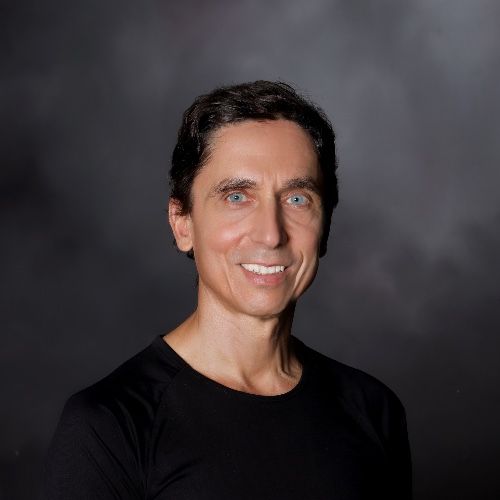
🎙 Endurance Capital | All in, all the time with Alistair Brownlee
🎙 Welcome back to Endurance Capital.
Most people still believe the same lie about elite performance:
that greatness comes from balance.
This episode challenges that idea through the extraordinary career and mindset of Alistair Brownlee — double Olympic triathlon champion, multiple world champion, Commonwealth champion, and one of the defining endurance athletes of his generation.
Alistair did not build his career by staying comfortable.
He went all in.
All in on training.
All in on racing.
All in on standards.
All in on finding out what happens when talent, discipline, risk, and total commitment meet under pressure.
Then he kept testing the edge.
The edge of intensity.
The edge of preparation.
The edge of what the body can absorb.
And the edge between commitment and overreach.
But what makes his story powerful is not only what he won.
It is the way he competed.
The way he raised standards.
The way he made intensity a system.
And the way he approached performance without half-measures.
This is not just a conversation about triathlon.
It is about intensity.
Standards.
Sacrifice.
Pressure.
Identity.
And what it really means to go all in, all the time.
In this episode, we explore:
Why elite performance requires uncommon standards
How Alistair developed his all-in approach to training and racing
What it takes to compete across multiple Olympic cycles
Why confidence is built through preparation, not slogans
How to manage pressure when the outcome matters
The difference between commitment and self-destruction
Why endurance sport rewards consistency, discipline, and suffering well
How to think about risk when the margin for error is small
What happens when intensity becomes part of your identity
Why performance requires both aggression and judgment
What remains after the medals, the races, and the pursuit of peak performance
What founders, CEOs, investors, athletes, and leaders can learn from elite competition
Featuring:
Alistair Brownlee
Double Olympic Triathlon Champion
Multiple World Champion
Commonwealth Champion
Professional triathlete and endurance athlete
Hosted by:
Ignacio Garcia
Founder, Trampoline Venture Partners
Host, Endurance Capital
Presented by Endurance Capital.
Endurance Capital sits at the intersection of endurance sport, longevity, founders, investors, and long-horizon decision-making.
It is a practical playbook for people building and backing durable things.
Sponsor:
This episode is brought to you by GetStride.com
Stride helps you understand how your body is actually adapting, so your decisions around training, recovery, and performance are based on signal, not guesswork.
Visit GetStride.com and use code TRAMPOLINE for £100 off STRIDE1 and 30% off any other individual Stride tests or supplements.
Links:
Endurance Capital Substack: https://substack.com/@endurancecapitalhq?utm_source=user-menu
YouTube channel: https://www.youtube.com/@EnduranceCapitalHQ
Stride: https://www.getstride.com
Alistair Brownlee: https://www.instagram.com/alistair.brownlee/?hl=en
Disclaimer:
Endurance Capital is intended for educational and informational purposes only. Nothing in this episode or accompanying materials should be construed as investment, legal, medical, training, or professional advice. Views expressed by guests are their own.
Editorial note:
This episode was produced from original interviews and source material and refined with the assistance of AI as an editorial tool. The ideas, conclusions, and final wording reflect my own judgment.
Transcript
Okay, this is going to be recorded on the studio, the intro and the outro, the end.
So I'll give you a bit of background so I'll read about it.
Welcome to Endurance Capital.
Today's episode is about something very simple and very dangerous.
What happens when there is no plan B, when you're working all in all the time?
In sport, that looks like a kind of, you know, somebody from Yorkshire who decides triathlon isn't just a hobby, it's the thing.
And then lifts that choice so completely that he wins two Olympic gold medals, multiple world titles, and races with a kind of honesty that hurts to watch.
On the front, no hiding and no excuses.
In startups, it looks like a founder who pushes the limits on an that might not work.
And has to wake up every day and recommit before the market.
The investors, their own doubts, and somebody telling them otherwise.
ampion in triathlon in London:Multiple ITU world and European champion and Commonwealth champion. and a guy known not just for winning but for how he raced from the front aggressively with total commitment and even through injuries and setbacks.
With him is today Jordan Liu, the founder and CEO of ISA.1, an early stage startup he's building from scratch and Jordan is living also with no plan B, living in all out, all in, all the time.
Long hours, unknowns everywhere, a game where 9 out of 10 companies don't make it, and in the area of AI when there is no second chance, as technology evolves every minute at the speed of light.
Today we will be asking, what does total commitment actually cost in body, relationships, identity, so on, and how do you stay that committed after you've been injured, doubted, or reading off?
And what can founders learn from someone who stood on the very top of the podium and then had to ask, what comes next?
I'm Ignacio Garcia, global early stage investor and endurance triathlete, and this is Endurance Capital.
Let's get into it, guys.
So, Alistair, we start with you.
From the outside, we see the gold medals and the titles, but there must have been a much earlier moment, where you quietly decided this is it.
This is something I'm really good at and there's no plan me.
I'm going to go all in all the time.
Can you take us back a little bit at Leeds when you were younger and what clicked?
It feels like a long time ago now to be honest Ignacio so thank you for asking but yeah I started triathlon.
I think I did my first one. as an eight-year-old.
Before that, I'd been doing some swimming and running.
For some reason, I just enjoyed triathlon.
My parents were helping me or exposing me to every sport going, so that was really cool.
We'd be trying football, cricket, rugby, triathlon, music, all sorts.
It was the sport that was the one for me.
It just captured my imagination.
I think the combination of swimming and jumping out of the pool and on your bike and getting changed and then running was just really cool.
So yeah, but it wasn't like, you know, I discovered it then as an eight-year-old, which was 30 years ago now, and decided this is what I want to do and focus on for the rest of my life.
I did a bit more of it through my teenage years, and it wasn't really until I was probably 19 that I really decided that I was going to focus really on triathlon to be a professional triathlete and ultimately try and go That's already a big parallel with founders, Ali.
There's usually a quiet moment where you cross a line internally and don't fully come back from it.
Jordan, in your area, I suppose it's a little bit different, but not much.
You've got investors, product launches instead of races, but there is a similar moment when you probably realized that you were an entrepreneur.
You are an engineer yourself, but take us back to that moment maybe when you realized that ISA was your project and Agentic Payments.
Well, yeah, for me, this kind of a, my version of the No Plan B, yeah, is a relatively, a little bit different, I would say.
But it wasn't like a, you know, kind of a dramatic moment.
It was quieter and actually more uncomfortable, I would say.
Yeah, I started as something I was exploring intellectually, how this kind of AI agent, when it becomes autonomous, can be more capable in handling things, a task on behalf of humans, and then they need more resources, even data, to complete that kind of certain task.
So it's very obsessing, because I fully believe that vision, that agent will be something in our society and for the people, on behalf of people.
So at the moment, I realized, when I had that idea, I told myself I was being responsible, keeping the options open, burning bridges, and staying employable, always kind of accept the paycheck, something like that.
But then, yeah, there was the moment where I realized something, I was thinking about it, the idea, first thing in the morning, and last thing at night, and even while pretending it was still optional.
So yeah, I would say the no plan B moment wasn't just like confidence, it was honesty for me.
And I realized that I was already emotionally committed, and just without taking the responsibility for it.
Yeah, so that's actually the, you know, my version of the No Plan B and when I started, you know, my current project.
Yeah.
Yeah, and you're doing it in, as I said at the beginning, in an area of AI where, you know, algorithms are programming themselves and really every second counts.
So there's really no Plan B in my opinion.
So you either make it or crash it.
I'm still making it while it crashing from time to time.
Yeah, I mean, you don't race to get second on the podium.
I guess you race to become at the top of the podium.
Ali, if we strip away the medals, let's just think about audience, you know, people listening, maybe CEOs or founders that are trying to build the next unicorn.
If you strip away the medals and just look at how you did and how you did it and what you did, what you have achieved.
The words people associate with you, correct me if I'm wrong, are things like honesty in racing, toughness, loyalty, front running, commitment, giving it all, all the time, etc.
If you had to pick two or three, let's say, characteristics that really shaped who you are today for your next career, what would that be?
I think, yeah, firstly, commitment.
I think ultimately everything that you do well in the world stems from commitment and hard work, long-term determination, putting the hours, yes, of course, being purposeful and efficient with the time, but throwing effort at it.
And so that firstly.
I think secondly, being innovative.
And I think one of my, really best skills in life is, and especially in sport, is seeing relatively difficult problems or where there is a lot of information floating around and that people make complicated.
And I'm good at simplifying that and just finding ultimately what's the most effective solution to that and then putting that into real world action.
And then, so that's innovation.
And thirdly, yeah, I think, I don't know whether it's the I think so very analytical but I maybe steered away from analytical purely because I like to think I'm someone who is analytical and makes very, very analytically based decision making.
But then I also work hard to make sure that I put that into real world action.
And I think that's quite often that kind of the process from analytics to decision to action.
I feel like things get lost along the way in the real world and complicated systems.
And yeah, I try to start with analytics, but always finish with action ultimately.
Just to answer before we move on to Jordan, I'm going to take a jump into the bath, however you say, and throw out a couple of characteristics.
Yes or no?
Okay, just quick.
So you are analytical?
Yeah, I think so.
You are committed?
Yeah.
You've got the grit?
I think so, yeah.
You're a loving person?
Most of the time.
Yeah.
You are relatively humble?
Yeah.
Apart from where you compete.
Yeah, true, yeah.
Yeah.
And you have a lot of people.
A lot of friends.
Yeah, I think I do.
A very diverse group of friends, which I really enjoy.
So I think those are, for me, those are absolutely fundamentals for success.
If you are a person that considers yourself or you are viewed to have those traits, those correct interests, it is very unlikely that you will not be successful.
Now, it's really up to you. how big that success is.
This is when we're talking to people like Jordan.
Jordan is not building a small startup.
Jordan is building the next unicorn, the next stripe, the next Facebook, the next, right?
What do you think about those traits, those characteristics of Jordan?
Would you see yourself or is that something completely out?
Yeah, I mean, yeah, my version of all those kind of, you know, characteristic that drives to the success of different levels.
Well, they definitely have something in common.
There might be a little bit over with what Alistair shared.
I will definitely put persistence as number one.
So, yeah, if you think about, you know, doing project A, then tomorrow doing project B, there's, you know, some kind of obstacle, then you want to bypass and give up.
There's no way you're going to achieve anything.
You're not gonna achieve anything.
So that's number one.
And number two, I mean, in a startup world, I would say, especially if you want to build a business, you gotta be decisive.
You gotta be decisive.
Why I'm saying that?
Because I see, I have been seeing many, many very smart people, you know, and I mean, they have this kind of psychological kind of weakness.
They make a decision. and takes so long to pursue that kind of opportunity, even a career path, something like that.
So be decisive, that's the number two critical characteristic you're going to have.
Number three, if I want to put it, you have to be very optimistic.
And for me, to believe before you can see, that's actually, we were talking about Alibaba, that's actually what I fully believe in Jack Ma, the founder of Alibaba.
So you have to believe before you can see.
People see, then they can believe.
And so to take that kind of a position, you have to be very optimistic.
I always believe there's something big, something bigger, something, you know, even, I got more lucky, more luck, you know, in the future.
Because there are so many uncertainties, there are so many obstacles.
If you're not optimistic, you're not going to hang on there, you're not going to take that long to achieve that goal.
So being persistent, being decisive, and being always optimistic.
It's a choice.
It's just a choice.
It's nothing very scientific in that way.
So that's my version.
I like that.
I share the same philosophy in life.
Thank you so much.
Ali, back to you.
The highlight reels don't really show the cost of all you put in or anyone puts in when they get to a successful career.
I love the life you left because we have shared a few little things and living the life you left, racing the way you did, from the front, always willing to hurt, comes with a bill.
Injuries, surgeries, missed races, rehab, and more.
What did that style actually cost you, Ali?
And it would be interesting for the audience to hear what have you learned from that?
Now you're in business, right?
No longer racing.
So how would you apply what you learned of the cost to get to where you went for your next stage in your career?
Yeah, I think it's an interesting one to try and tie it in with, I think, what Jordan was trying to say then, important to persistence, but also in terms of being decisive.
I saw that as kind of a level of conviction.
And I think in sport, you know, to not oversimplify it, you've kind of got two options.
You've got an option of, do I want to get to that start line at 100% knowing that I've done everything I possibly can and given myself the best possible chance of winning?
Or do I want to get to that start line at 95% knowing that I've got a much lower chance of being injured, ill and whatever, but I've got less chance of winning that event?
And so my very strategic decision for the biggest racers was always I want to get there at 100%.
I want to make sure that I've given myself the absolute best chance of winning, but the other side of that coin is that you have injuries, illnesses, whatever, because if you're tiptoeing on that knife edge, the very metaphorical knife edge, it's easy to fall off it.
But that was a strategy.
So yeah, I mean, the cost was missed races, injuries, lots of frustration and heartache and everything else.
But yeah, on the whole, I'm not sure I would do anything in a different way.
So it is what it is.
I think, you know, we quite often hear this concept in business, especially early stage business. of move fast and break things in the tech world.
That is true.
In the sporting world, that is actually harder to do, of everything I've just said.
If you move fast and break something with experimentation, you break yourself.
The number one, the only thing you've really got is your own body and your own mind.
You have to look after that.
So I think what have I learned, I mean, I think I still fundamentally believe in trying to do things to the best of my ability.
I am probably maybe a little bit more balanced sometimes in my work outside sport, but I'm actually not sure if that's the right approach.
I still think conviction is super important.
As Jordan said, he described it as a decisiveness.
But yeah, I think once you've made a decision, you should do everything you can ultimately to execute on that decision and what you're trying to do.
Without mentioning the person, do you have anyone around you that always is kind of your subconscious telling you, Ali, get grounded, relax, get balanced, you have to be here for the long term in business, in life, in relationships or no?
Yeah, I think to be honest, I, A few people play that role in my life.
For sure, definitely at times my better half, Ruth.
But other times it has been my brother, it's been other members of my family, it's been friends, people that I train with.
There's nothing like to be grounded, for example, of, I don't know, you've just won a race or something and then you go and see your friends that you've known a long time for a bike ride and they're still saying very rude things to you.
I'm treating you exactly the same.
And I, yeah, I kind of, maybe I wouldn't have always seen it like this, but I do really see the value in having, it's so important to have different groups of people interact with different people the whole time who, yeah, treat you differently, know you differently, know you for different amounts of time.
I really enjoy that.
Yeah, we've spoken actually, it's a very fair point, and I appreciate your honesty on this.
The power of the pack.
We've spoke about, you know, whether how can you get to where you got or where Jordan got or anyone, you know, that has raced for 20 years and stay at the very top of Ironman or Triathlon without a pack, without a group of people that pick you up when you're down, when, you know, by your side, the low moments, etc.
I don't really see how somebody, apart from maybe one or two exceptions, can be successful in life, in business, in relationships without having a support group.
There are plenty of research that talk about research for over 50 years of consecutive research about the importance of social relationships and how other people around you ground you and give you perspective. and all that.
And I suppose that in racing it's also very important to keep you, not just to win but to champion.
And that's what I differentiate between a winner and a champion.
A champion is somebody that can be a winner sustainably for many, many years.
Right?
We can ask maybe whether NVIDIA is a champion or a winner.
You know?
or Microsoft is a champion.
But NVIDIA has been a very successful story for a very short time, in a way.
Anyway, that's what I think.
Jordan, founders don't get stress fractures the same way.
But the injuries are real.
You know, burnout, anxiety, broken relationships, health issues.
I see you're smiling already co-founder fallout.
You know, I talk to founders that don't perceive success without burnout, honestly.
I've seen founders in hospital.
I've run.
I've taken founders to train, and their heartbeat would go up to 200 beats per minute on the first 250 meters.
You know, these are guys under 30.
And I'm 56.
I'm 56.
And, you know, when my heartbeat was at, let's say, 110, 115, just jogging, let's say, with them, the heartbeat was at 180, 190.
So I don't perceive that anyone carrying that lifestyle can have a successful career to become a champion.
So let's talk about you Jordan.
Have you had your own version of injury, rehab or perhaps you haven't and you have your own strategy to prevent it?
We've spoken about this before right?
Yeah.
So yeah speaking of injury I also do sports not at Alistair level.
I do like basketball you know when it was you know I got injured.
But if you put into the context of like, you know, starting up a company, I would say, yeah, there are two kinds of injuries, right?
Number one, this kind of a physical injury.
Then you got burnt out, as you mentioned, you know, all those kind of funder being turned up, you know, You know, you know, lay in a hospital, you cannot even run like one kilometers, you know, kind of this.
And that kind of physical kind of injury really happens.
I also have some funner friends, you know, suffering this kind of physical problem.
But for me, I'll talk more about this kind of mentally or even psychological injury, right?
And for me, I think psychologically, this kind of injury doesn't really, if you're mentally as strong, and I don't count it as an injury, because every, this kind of, I still call it being feared, being like, you know, yeah, I would say most of the time it's actually the fear and anxiety.
If you can overcome that kind of moment, you'll become much stronger.
It 100% aligns with what the great people saying.
What cannot kill you can make you stronger.
I mean, physically.
I mean, mentally.
Physically, you have the limit.
But mentally, I would say that always gets you stronger and stronger.
For example, if I get a chance to meet some kind of big potato, big investor, very big name.
First meeting, I got very nervous.
I don't know what to say, how to put my hands.
But second time, I feel much more comfortable.
So yeah, my version of injury, I have to say, we have this kind of mentally anxiety and fear from time to time.
But I think as a founder, we have to learn how to overcome it.
In terms of other sort of injury, yeah, it will be relationships. with the family, with the friends, we have to learn how to balance it, right?
Spend a little more time with your wife, with kids, and to balance your wife, you know, this kind of family relationship, because that's very, very important.
That really make you, you know, calm, make you, you know, more productive while you're building something.
So, yeah, actually, I'll say that's my My version, my understanding of this kind of injury.
But it's very important to keep you physically healthy to run this journey.
That's why we would talk with Ignatio.
I do meditation every day to make me a whole of my body and my mental to be clear.
And I do jogging not very long, like three kilometers, five kilometers every day.
So keep my physically healthy.
So yeah.
Ali, have you been mentally burnt out to the point where you thought, I need help?
I think that mental burnout actually doesn't necessarily come from...
So external stresses, whether it's like work stress or sporting stress, isn't the driver as far as I'm concerned.
And I don't think that because I think I've felt mentally burnt out at times of actually much less external stress than I have when I've been absolutely fine.
So I, from my perspective, it's all an internal thing.
And I think that's what Jordan was saying.
As long as you're kind of enjoying what you're doing and you're in a positive surrounding and the environment that you're in is very kind of productive and socially good, I think you can cope with enormous amounts of kind of mental stress and strain.
So for me, if I've had injuries, and then internally, that's made me more vulnerable.
At that point, yeah, I have kind of struggled.
Never to the point that I've probably thought there was any more extreme than anyone else, although that I felt like I've needed to get help or input.
But yeah, I had some sleepless nights and some very frustrated days for sure.
Excellent reflections, both of you guys.
I really love it.
Ali, this is prompting me to, a question we can include it or not this is an improvised question do you think you would let's i want your honest direct straight answer do you think you would be the person you are and the athlete you are and now the businessman you are without johnny uh no definitely not um i mean the easiest way to answer this to say Yeah, of course, you know, none of us would be exactly who we are today without all of the interactions we've had, right?
So, I mean, there's an extent of that.
But Johnny has had an enormous impact on my life.
We train together three times most days for pretty much every day of the year for 10 plus years.
So, like, enormous time together, you know, really shaped each other, had a strong relationship, had to work out how to train together. and compete on the biggest stage.
So yeah, he's had a massive role in shaping exactly who I am.
Let me turn the screw on the question a little bit.
So what you're saying is you wouldn't have achieved gold if you hadn't had the relationship you had with Johnny?
So that's a slightly different question.
Would you have achieved something specifically with or without Johnny?
I mean that's an impossible question to answer because you know who knows I think on balance it would have been less likely that I would have won those medals without Johnny and I think that's very fair to say for a few reasons I think one reason is obviously we had a massive impact kind of physically on each other being able to push each other along and train with each other and really drive each other to be the best versions if we could by kind of competing about how much training we could do and all of those things.
I also think there was psychologically quite a big impact as well being two young guys going around the world together training all over together and going through those pressures and expectations together.
I think that was really, really important.
Yeah, I mean Jordan, I'm thinking about it with co-founders.
There are in fact There are very successful investors out there that say they would only invest when there is a co-founder.
And that is a question we all have to ask ourselves, you know, because one may be technical, the other one more sales, one may be engineering, the other one more finance.
What's your take on having a co-founder?
You have no voice.
Hmm.
Oops.
So, yeah, my take is it's definitely a team instead of just one person, especially in the age of AI, because you got so many things to handle, right?
Tech, product, market, go-to-market, you know, sales and, you know, their HR finance.
In terms of the core team members, I value very high in terms of how we can share the same kind of value, we share some kind of a vision and characteristic wise we complete each other.
For example, I'm a person a little bit more outspoken and my co-founder will be more like interval and focus on much more detail and the tech and product.
So yeah, I don't see any, even all those kind of great entrepreneurs, you see Jack Ma, you got Joe Tai, you know, Mark Zagbuck has at least an earliest co-founder, even in great college, right?
But they have like, you know, the CEO from, I forgot her name, right?
The very famous CEO from Google to grow, you know, Facebook's ads business to be like 100 billion.
Yeah, everybody got a co-founder.
I didn't say any single, you know, wholly functional, you know, founder can build a, like, unicorn, you know, 10 billion, 100 billion kind of company.
So, yeah, that's by default.
That's a yes to have, you know, have the right co-founders.
Yeah.
It's interesting.
Let's move guys to another topic which is life after the peak.
The perceived peak.
I always also talk about the perceived summits.
So Ali, you might have thought you have achieved a summit by raising and achieving goals and being popular and having lots of friends and et cetera.
But the way I see life is that these are are all fall summits.
There's always a summit.
And I talk about it because I love the mountains.
And when you are in the mountains, depending on what part of the valley or the mountain you are, you see the summits.
These are perceived summits.
You go up to that summit and all of a sudden there is a higher mountain to climb, not from the negative point of view, but from the opportunity point of view, right?
So I always think there is life after those successes and probably even more life, more success, more relationships, more business projects, etc.
So tell us how did you handle that transition from triathlon racing, you know, racing is my life, it's my whole thing, and my identity, to what comes next?
Yeah, I completely agree with your kind of selection or idea of how you articulate it. there.
Although, I actually don't think, really, I feel like it's striving that's the important thing.
And you said that as, you know, it's kind of a false summit.
And I would say it as if, as in, you kind of actually never get to a summit, you're just always climbing up the mountain with a, with a, with a summit that constantly gets further away because the actual real enjoyment is the kind of, you know, it is, is the climb as it were.
And that is super cliched, but yeah, I think it's so true.
And, and that was, that was it for me.
I think I've had a few whatever we want to call it but kind of false summits over the years the Olympics for example in London was something that was a childhood dream of mine and had been that for you know for seven years literally or even longer but I'd known about that race in London on that day for seven years and that was so important to me and then you achieve it and and there's a little bit of a hole and you very quickly realize that the only that you've got to keep keep moving on and setting new goals and it was exactly the same for me I think moving post sport I've done a lot of work in the last few years of my career of what I wanted to do next and some things what excited me and what didn't excite me so much and yeah so literally as soon as I stopped although it didn't happen like you know I stopped one day and started something the next day it was more like a phased approach I had a bunch of other things to jump in and get excited by and new summits, as you were.
So that's really important to me.
Yeah, I can see that coming.
For you, Jordan, founders have a version of that exit or when it comes to sales.
So if your whole identity is a startup and the chapter closes, you have to have perspective because the fall can be very steep, right?
So what's your perspective on that?
Well, yeah, first of all, compared to what Alistair achieved, that's the peak.
That's the real peak.
For me, even I had two exits, it's like some kind of hills, not mountains at all.
So yeah, I can foresee it, but I don't think I'm never very much qualified to say, talk about that after peak, what I'm going to do.
But there's definitely the moment that after you climb on the peak of the mountain, then how are you going to smoothly land it on the ground, right?
Well, I haven't thought that much, but what I can think about is, yeah, we experienced so many up and downs and got a little bit of a bit of a bit of a bit of a bit of a bit of a bit of a bit of a bit of a bit of the 4Chain after Exit, then how...
The next chapter will be how we can help other people like Ignatia you're doing right now.
Supporting the new founders, capturing the new wave of the technology of society.
That will keep us as a founder excited and meaningful of our life after peak.
So that's my take.
Let's not lose the perspective of this episode, which is is all in all the time.
But if we take that literally, people actually burn out.
So it's a very difficult, I think it's kind of an art.
How can you be all in all the time without burning out?
In fact, as I was saying, I know founders that don't perceive success without burnout.
Ali, looking back now with a little distance, right?
When we saw you running in front of Javi or with your brother, Johnny, etc., those races, epic races in London, for example, how would you explain total commitment in a way that a founder can actually use without destroying themselves?
Yeah, I describe this as very simply, it's a consistency, like longevity trade-off, right?
always going to be worse than:And so if you want to do something well, it's all about ultimately aggregating those hours which compound on each other.
And you do that by having a consistent approach to life.
And to be consistent, there's all kinds of things that need to come into that.
One is balance.
You need to be able to do that week in, week out, balanced around the rest of your life.
So therefore it has to be able to fit in with everything. anything else that you do.
It has to be sustainable in that you have to have a psychological approach that makes it sustainable in that you can't do loads of it one week and then none of it the next week.
So yeah, consistency of approach I think is everything and forming good habits around that.
Never giving yourself the option of you're going to get up today and you're going to do what you need to do.
Not giving yourself the option of not doing it.
Jordan, do you see life as a founder the same way in authentic payments?
Yes, true.
I'll say first, you got to take calculated risk.
You don't take this kind of uncalculated risk.
That's the first principle.
And number two, be psychologically ready for, you know, there's definitely no certainty in the whole journey.
So, yeah, if you take that too, and be disciplined in terms of your life, what you eat, what you going to work or take a rest, all kinds of things add together.
So yeah, that's how we can do a healthy all-in in this kind of context.
Yeah.
Do you have any habits, any non-negotiables that you practice?
to avoid the breakdown when you're doing all-in all the time.
Yeah, as mentioned, I think I have a very quick, quite a good, you know, healthy routine every day.
I do meditation 10-15 minutes in the morning.
And afternoon, I'll do at least like 15-20 minutes, like, you know, juggling, get some strats.
You know, that's non-negotiable even with my family, even with a business trip.
So, yeah, I'll try to keep that.
Ali, just a little bit on handling pressure, because this is also something, you know, the audience, people building startups or even other athletes.
On the start line of one of those big races, what did you actually do with that pressure?
How do you handle pressure?
Pressure comes in two forms. as the external version of it that is applied to you and the internal version of it again this sounds like another cliche but i think it's a very important one because um you know to do anything well you've had to have so much commitment to it everything that we've already you know said commitment to it you have to be very decisive you have to work hard at it as to you have to be borderline obsessive that the that internal pressure is big and should be big because you know something means so much to you that you're so much effort in to get there then you should be feeling that so I think dealing with that for me is the real crux of performance and lots of high performance performers struggle with that and lots of very good athletes I think actually struggle to stand there and know that there's no reason why they shouldn't perform to the best of their ability so that's one thing and you know I dealt with that ultimately by saying I've my job is to prepare for the best of my ability and now I've done that I've I've I'm now stood on the start line.
I'm prepared to the best of my ability.
I've just got to go out and deliver, which is the fun bit.
I also, the external pressure that's applied to you, there's nothing you can do that.
One of my coaches told me a long time ago, he said, it's much better to have external pressure than not have it.
Giving me the old statement, pressure is a privilege.
But going slightly further than that and saying, look, you're much better off having pressure than not having it because it means you've done something to deserve it.
And isn't that a good thing?
You know, see that as an achievement in and of itself.
And so I always kind of took that away with me as well.
I love that perspective, actually.
Jordan, let's talk about Founders Spotlight for you.
You don't have 80,000 people in a stadium cheering at you. or on a race, but you do have investors who don't want to lose their money.
You have a team to feed users, maybe regulators looking at you.
What have you learned so far about handling those spotlight moments, pitches, key meetings, fundraising, recently launches without freezing or overselling?
Yeah, we do have all kinds of.com spotlights.
People are watching from all perspectives, right?
Customer, investor, regulators.
And I took that as, you know, by default, that's the routine kind of things we have to handle.
To be honest, I don't think that's kind of like even pressure come to me anymore.
So in terms of this kind of how we handle this kind of spotlight, it's very simple for me.
I just focus on my goal.
I have a clear objective goals year on year, quarter by quarter, month by month, week by week.
And so once you have that kind of clarity, I'm not worried about how we're going to impress somebody, entertain somebody.
We have to do it.
Follow our roadmap.
So with that kind of clarity, everything is normal.
There's no spotlight or even boring normal life.
Everything is spotlight.
Everything is like a normal life to me.
Yeah.
Very interesting, Joel.
Thanks for sharing that.
So I think in both cases, whether you are in Leeds or in a pitch room, the game is always the same.
You build enough internal stability, you do your homework, you work to your limits, so that the external noise doesn't knock you off when it comes.
So we're getting now to the end, guys.
This is the part I love the most, which is the quick fires.
So please just say a short answer.
We start with you, Ali.
One moment you were proud you didn't give up.
One in particular.
I think a sporting career is a constant exercise and not giving up to be honest.
So it's kind of, not actually the question, but just constant resilience and not giving up.
Okay.
Jordan?
Yeah.
One moment you were trying to give up.
Yeah.
I mean, I don't know how to answer.
We can edit it.
Okay, so yeah, there are lots of moments I'm not giving up.
Yeah, I don't know how to answer that properly.
Okay, think about it while I ask Ali the next one, and then we'll come back to you.
Ali, what do you think people get wrong about being elite in sport and in business startups?
I would go on the consistency point that actually being elite is doing really difficult one-off things where it's not.
It's trying to operate at the highest level that you can do consistently over a long period of time.
I think that's true performance.
Okay.
And Jordan, for you, one thing people get wrong about being elite, being top in entrepreneurship?
We are, no matter if you're Olympic gold, even a founder of Unicom, a hundred billion company owner, we're just normal people.
I mean, so yeah, we can't be wrong and we're not 100% like 10X, 100X smarter than normal people.
We just grab the opportunity and make the right decision, be consistent, be decisive, be optimistic, then they are there.
So I think that's the common wrong perception about elite and founder of Olivia Gold.
That's my take.
Okay.
And Ali, last one.
Just finish the sentence.
You earned the right to go all in when?
I don't think you need to earn the right, actually.
I think anyone can go all in. and make the decision to do it.
You can do that any time of any day.
And I don't think you'll ever regret it.
Okay.
And Jordan, you earned the right to go all in.
When?
When you're honestly counted the cost and you choose it anyway without needing guarantees.
Okay.
Thank you, guys.
Thank you.
Alex, just last one for you.
What keeps you, jumping out of bed every morning in your new life as a businessman, entrepreneur, consultant, et cetera.
And what projects that you can share to the audience in case anyone wants to reach out?
Yeah, I think it's that combination of different things.
I have a combination of my own businesses and working in other domains.
And I love all of that.
One of my big businesses that I've been working on very hard with this year is a sports health nutrition business, True Fuels, that I know you know a little bit about.
And that's super exciting.
I've been on a, even though I've been involved in startups before, you know, the pace of this one and the people, it's been super exciting and a massive learning curve for me.
So that's big.
We're starting to get some really, some good traction now, actually acquiring some great customers, really found out. a good way to do that.
We've got a fantastic, very innovative product coming soon.
So that's exciting.
And then outside that, yeah, everything that I do, I try and define as it's removing the barriers and helping people to live healthy and active lives.
And that works across investing with a UK-based VC and working for a big tech amalgamator business at the moment.
I'm loving that as well.
So, yeah, it's a very exciting time for me.
Okay.
And sure, sure, you will, again, going back to the fall summits, if you think you have achieved gold so far, just wait a couple of more years and maybe you'll achieve platinum or something else better.
Jordan, can you tell the audience what's your vision on agentic payments and commerce in a way that, even we can understand.
So, yeah, our vision is to rebuild the payment system for the AI agents.
Meaning, you and me as a human, we're using our credit card, pay, you know, pay our listeners, you know, products for nutrition for a better life.
And for the goods, you know, merchants and agents need a system to pay the large-junction tokens, GPU, for Trip Planner.
So that's our vision.
We want to build that system for that agency to use.
So yeah, I hope everybody, we're going to see in the next one year, one and a half years, that confidence will come to us in our daily life.
We'll be there.
Okay, excellent, excellent.
Okay, so now we are almost done, guys.
Thank you so much.
Where can everyone find you if they want to find you and talk to you about interesting things?
Ali?
You can find me on Instagram, X, LinkedIn, probably anywhere.
Google and get in touch.
I'd love to hear from you.
Okay.
Well, yeah, for me, it's simple.
You can reach out to us through X Twitter.
It's AISA1HQ, that's our handle, and our website AISA.1.1 is meaning unified access to all the resources for AI agents.
Excellent.
Well done.
I'm really happy that we hit it in just about an hour.
Excellent.
Okay.
Thank you for that.
I enjoyed it.
That was really good.
Thank you very much.
Did you do something different than anybody else?
Yeah, kind of.
Yeah, kind of.
Okay.
And now we will let James, the producer, to do the magic and edit it a little bit.
And over the next couple of weeks, I have to decide how to publish it.
Sure.
I will show you the video, Ali, to see if and how you want to get involved in a way.
There is no particular ambition, actually.
This is just a fun exercise.
I started in Kona talking to Mark Allen and then with everybody else.
But if something interesting comes out, then we will push it to help other people and inspire people.
That's great.
Thanks very much.
I better go.
Thank you.
Bye-bye.
Thank you very much, Minister.
Jordan, thanks for your time and for your patience.
My pleasure.
My pleasure.
Yeah, it's a great opportunity to talk to people like Adester.
First time to talk to Olympic gold face to face.
Love it.
Are you still considering Ayurvedagram or where are you on that?
India.
Which one?
Yeah, I'm still in.
Definitely.
Okay, you should have received.
Did they send you a quote or an email for the program?
I think I saw an email regarding a bad reservation.
I didn't go very detailed about if you have any like the quotation, the plan to end up something.
You can share with me.
You can send it to me.
They sent you something?
No.
I think I saw the email just, you know, wrong regarding some kind of a bad reservation.
You mean they sent over to me or you sent over to me?
No, no.
I think I sent an email to a guy called Vine, who runs customers at the farm.
And he should have provided with a proposal, with a program and all that.
You didn't get that.
I didn't see it.
Okay, I'll follow up.
I appreciate that.
You can copy me in the email and I will look into it.
I'll handle that.